

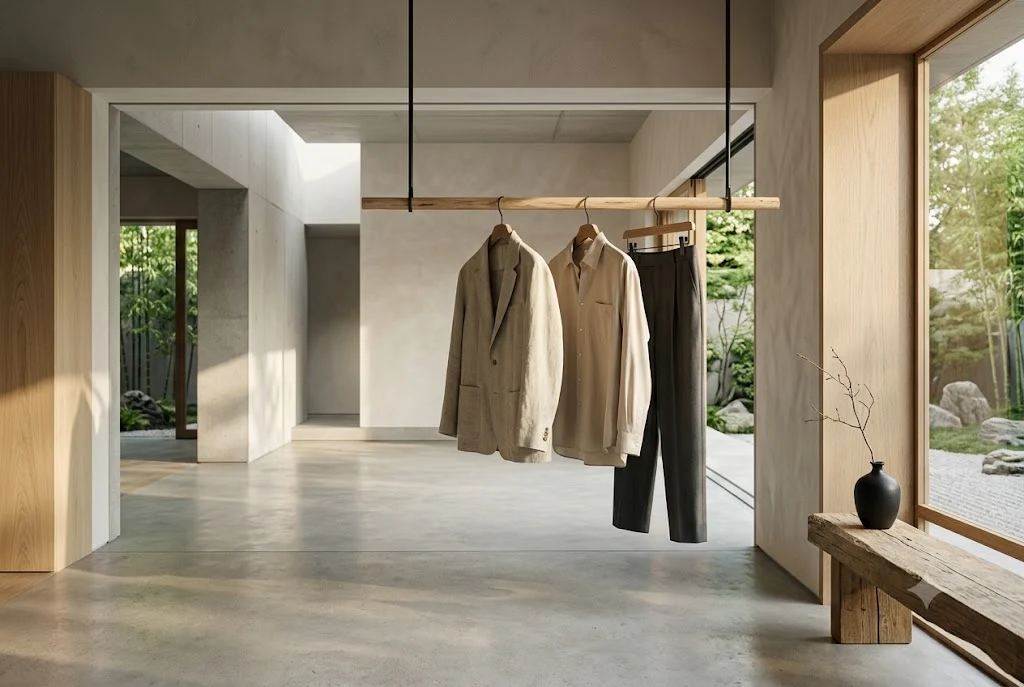
Every clothing brand begins with an idea. Sometimes that idea starts with a particular fabric, a distinctive silhouette or a gap in the market. For Mupoints, the starting point was more philosophical.
The brand was inspired by the Japanese idea of “mu”—a concept often associated with absence, openness and freedom from fixed definitions. Rather than treating “nothing” as emptiness, Mupoints sees it as possibility: a space in which identity, movement and personal expression can develop without being controlled by rigid expectations.
That idea became the foundation of a modern clothing brand built around one central principle: freedom beyond style.
Looking Beyond Fashion Labels
Modern fashion gives people more choice than ever before. New trends appear every week, social media introduces endless aesthetics, and almost every way of dressing can now be given a name.
Minimalist, classic, streetwear, quiet luxury, vintage, romantic, casual and many other categories can help people discover new ideas. At the same time, these labels can become restrictive.
A person may begin to feel that every outfit must fit into a recognisable aesthetic. Clothing becomes less about instinct and more about meeting expectations. Instead of asking, “Do I feel comfortable in this?” people may ask, “Does this look correct for the style I am trying to follow?”
Mupoints was created as an alternative to that pressure.
The brand does not reject style. It simply believes that style should remain a tool rather than become a limitation. Clothing can express personality without defining a person completely. It can change with mood, environment and experience.
The individual should always have more freedom than the outfit.
The Meaning of “Mu”
The first part of the name Mupoints is inspired by the Japanese word and idea mu.
In a simple translation, mu may be understood as “nothing,” “without” or “absence.” Yet within Japanese and Zen-inspired thought, it can suggest something more complex than an empty space.
It can represent the removal of a fixed answer.
Imagine an empty room. At first, it may seem as though there is nothing there. In reality, the room contains possibility. It can become a place to work, rest, create, meet others or simply think. Because it has not yet been filled, it remains open to interpretation.
Mupoints applies this way of thinking to clothing.
Before a garment is placed inside a complete outfit, it is open. It does not have only one meaning. A coat can appear formal or relaxed. A sweater can feel understated or expressive. A pair of boots can add structure to a simple outfit or become part of something more experimental.
The meaning comes from the person wearing it.
For Mupoints, mu represents freedom from the idea that clothing must always communicate one fixed identity. It creates space for movement, change and personal choice.
Why “Points” Matter
The second part of the brand name—“points”—reflects the many moments and directions that form everyday life.
People rarely remain in one place, emotionally or physically. A single day may include work, travel, rest, social plans, unexpected changes and quiet time alone. Life moves between different points.
Personal style moves in the same way.
A person may dress differently depending on the season, their schedule or simply how they feel. What feels natural today may change tomorrow. Mupoints does not see this as inconsistency. It sees it as a normal part of being human.
The name brings these two ideas together.
“Mu” represents openness and freedom from strict definitions. “Points” represent movement, experience and the different stages through which people pass.
Together, they describe a brand designed not around one finished image, but around possibility.
Japanese Inspiration Without Imitation
Japanese culture has influenced global design for generations. Architects, artists, product designers and fashion creators have long been drawn to its attention to proportion, simplicity and the relationship between form and space.
Mupoints is inspired by these principles, but it does not attempt to imitate traditional Japanese clothing or use Japanese culture as a decorative theme.
The influence is more subtle.
It can be found in the appreciation of clean forms, thoughtful details and visual balance. It appears in the belief that simplicity can have depth and that an object does not need excessive decoration to feel complete.
In Japanese-inspired design, empty space is often treated as an active part of the composition. What is not added can be as important as what is included.
This idea is especially relevant to clothing.
A garment does not need to contain every possible detail. Sometimes a strong silhouette, balanced proportion or considered texture is enough. Removing unnecessary elements can allow the wearer to become more visible.
The clothing supports the individual rather than competing with them.
Simplicity as a Form of Freedom
Minimalism is often misunderstood as a specific visual style: neutral colours, clean rooms and very few possessions. For Mupoints, simplicity is not a strict aesthetic rule.
It is a way of creating freedom.
A versatile piece can be combined with different parts of a wardrobe. It does not demand a complete new outfit or one particular way of wearing it. It gives the owner room to experiment.
This is why the brand values designs that can move between different settings. A garment may be worn during a working day, on a journey or during a relaxed weekend. Small styling changes can transform the overall feeling.
The goal is not to create clothing that has no identity. It is to create clothing with enough character to feel distinctive and enough openness to remain personal.
Simplicity also reduces the pressure to constantly reinvent oneself through new purchases. A useful wardrobe can be built around pieces that continue to work across seasons, changing routines and evolving preferences.
Freedom does not always mean having more. Sometimes it means needing less in order to do more.
Clothing for Everyday Movement
The philosophy of Mupoints is not only abstract. It is connected to the practical experience of getting dressed.
Clothing is worn in motion. People walk, sit, travel, work, meet friends and move between indoor and outdoor environments. An outfit may look successful in a photograph but feel restrictive during a real day.
Mupoints believes that comfort should be part of design from the beginning, not added as an afterthought.
This does not mean choosing between appearance and ease. The two can work together. A relaxed silhouette can still feel refined. A structured piece can still allow movement. Practical clothing can remain visually thoughtful.
The brand’s approach focuses on the balance between shape and comfort. Clothing should feel natural enough to become part of daily life rather than something that demands constant attention.
When people feel comfortable, they are often more confident. They can focus on their day instead of repeatedly adjusting what they are wearing.
That sense of ease is another form of freedom.
The Wearer Completes the Design
Traditional fashion advertising often presents a complete lifestyle. It shows the customer how to dress, where to go and what kind of person they should appear to be.
Mupoints takes a different position.
The brand does not want to provide a finished identity. Instead, it offers starting points.
A piece of clothing begins a conversation, but the wearer determines the final meaning. The same garment can look completely different depending on personal styling, body language, surroundings and the other pieces around it.
There is no single Mupoints person.
The brand can be worn by people with different routines, tastes and ways of expressing themselves. What connects them is not one aesthetic but a shared appreciation for independence, comfort and choice.
This makes the customer the central figure in the brand’s story.
Mupoints does not ask, “How can we make everyone look the same?” It asks, “How can clothing give different people space to remain themselves?”
Freedom Beyond Style
The phrase Freedom Beyond Style expresses the core of the Mupoints philosophy.
It does not mean that style has no value. Style can be creative, emotional and deeply personal. But it should never become more important than the person creating it.
Freedom beyond style means dressing without feeling controlled by every new trend. It means being able to change direction without believing that your previous choices were wrong.
It means wearing something because it feels right, works with your day and reflects the person you are in that moment.
Most importantly, it means understanding that identity is always larger than appearance.
A person is not one outfit, one aesthetic or one trend. People contain contradictions, changes and possibilities. Their clothing should be able to move with them.
A Brand Built Around Possibility
Mupoints began with a Japanese-inspired idea: that absence can create space, and space can create freedom.
From that idea came a clothing brand that values simplicity without uniformity, comfort without carelessness and identity without restriction.
The story of Mupoints is not about finding one perfect style and following it forever. It is about remaining open.
Open to new combinations.
Open to change.
Also, open to different versions of yourself.
Every garment becomes a point from which something personal can begin.
And perhaps that is the real meaning of freedom in fashion—not having no style, but knowing that style never has the final word.
Mupoints: Freedom Beyond Style.
