

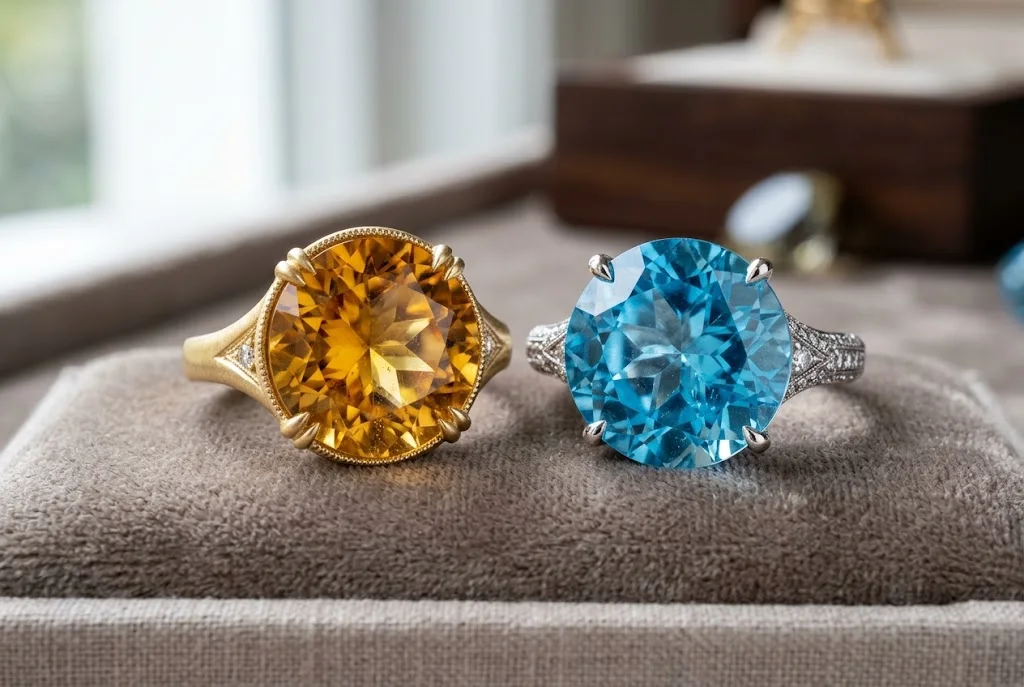
Citrine and topaz are both closely associated with November, and their warm golden colors can sometimes make them look similar at first glance. However, they are two completely different gemstones with their own composition, characteristics, colors and jewelry appeal.
For anyone choosing November birthstone jewelry, understanding the difference between citrine and topaz makes it easier to decide which stone suits their personal style.
Citrine is a variety of quartz known for its yellow, golden and orange tones. Topaz is a separate mineral that occurs in several colors, including yellow, orange, pink, white and blue.
The two stones can overlap visually, particularly when comparing golden varieties, but they offer quite different options when you look beyond color.
If you want to understand the broader significance of November’s gemstones first, our November birthstone guide covers their history, meaning, symbolism and jewelry uses.
Citrine vs Topaz at a Glance
The easiest way to understand the difference is to compare their basic characteristics.
| Feature | Citrine | Topaz |
|---|---|---|
| Gemstone type | Quartz variety | Separate mineral |
| Common colors | Yellow, golden, orange | Yellow, blue, pink, orange and others |
| November association | Yes | Yes |
| Classic appearance | Warm and sunny | Warm golden or cool blue |
| Jewelry use | Rings, necklaces, earrings | Rings, necklaces, earrings |
| Visual character | Warm, cheerful and earthy | More varied and versatile |
| Popular blue variety | No | Yes |
Although both can represent November, they should not be treated as interchangeable gemstones.
What Is Citrine?
Citrine is a yellow-to-orange variety of quartz.
Its most recognizable characteristic is its warm color, which can range from pale lemon yellow through golden shades to deeper orange and amber tones.
The stone has a naturally sunny appearance that works particularly well with warm metals and autumn-inspired jewelry.
Citrine is also relatively approachable as a jewelry gemstone, making it popular for rings, pendants and earrings.
Citrine’s Color Range
Citrine can display several shades, including:
- Pale yellow
- Lemon yellow
- Golden yellow
- Honey
- Amber
- Orange
- Deep reddish-orange
The exact appearance depends on the individual gemstone and how it has been treated or produced.
This warm palette is one reason citrine fits naturally into discussions about November birthstone colors.
For a broader look at the color story, read our November birthstone color guide.
What Is Topaz?
Topaz is a distinct mineral and is not a type of quartz.
It occurs naturally in several colors and can be found in colorless, yellow, orange, pink and blue varieties.
This wider color range is one of the major differences between topaz and citrine.
Golden topaz can look similar to citrine, particularly when both stones have warm yellow or amber tones. However, blue topaz gives November-born jewelry lovers an option that is completely different from the traditional golden palette.
Why Are Citrine and Topaz Both November Birthstones?
The association between gemstones and birth months has developed through a mixture of historical traditions, cultural practices and modern jewelry conventions.
November is commonly associated with both topaz and citrine.
This gives people born in November more than one gemstone option.
The two stones can represent the month while providing different visual experiences. Citrine generally emphasizes warm yellow and orange colors, while topaz offers both traditional golden shades and cooler alternatives.
For a complete overview of the history and symbolism of November’s stones, see our November birthstone guide.
Citrine vs Topaz Color
Color is probably the easiest place to see the difference.
Citrine
Citrine is strongly associated with:
- Yellow
- Golden yellow
- Honey
- Amber
- Orange
Its overall appearance tends to be warm.
Topaz
Topaz has a much broader color range.
It can appear in:
- Golden yellow
- Yellow
- Orange
- Pink
- Colorless
- Pale blue
- Strong blue
Blue topaz is particularly popular in contemporary jewelry.
This means someone looking for a November gemstone is not restricted to autumn-inspired colors.
Golden Topaz vs Citrine
Golden topaz and citrine are the two varieties most likely to be confused visually.
Both can display warm yellow and golden tones, particularly in jewelry photographed under warm lighting.
However, they remain different gemstones.
If you are choosing between them, avoid relying solely on a photograph.
Ask about the gemstone’s identity, treatment and characteristics, especially when buying a larger or more expensive piece.
The setting can also affect how a gemstone looks. Yellow gold can make both stones appear warmer, while white metals can create more contrast.
Blue Topaz: The Cool Alternative
Blue topaz is one of the most interesting aspects of November’s gemstone tradition.
While citrine remains firmly associated with warm colors, topaz can provide a completely different aesthetic through its blue varieties.
Blue topaz can range from pale sky blue to deeper blue tones.
This makes it suitable for people who like the idea of a November birthstone but do not necessarily want yellow or orange jewelry.
It can also work particularly well with:
- White gold
- Silver
- Platinum
- Minimalist settings
- Contemporary jewelry
- Cool-toned fashion
Which Stone Is More Traditional?
If your idea of a November birthstone is a warm golden gemstone, both citrine and golden topaz fit the traditional image.
Citrine is particularly recognizable for its sunny yellow-to-orange appearance.
Golden topaz offers a similar warm palette while providing access to the wider color family associated with topaz.
There is therefore no need to choose based solely on tradition.
Your personal preference can be the deciding factor.
Citrine vs Topaz for Rings
Both gemstones can be used effectively in rings.
Citrine works particularly well in designs that emphasize warm color.
A large golden citrine can become the main visual feature of a statement ring, while a smaller stone can provide a subtle everyday accent.
Topaz offers more stylistic flexibility because of its broader color range.
Golden topaz can create a traditional November look, while blue topaz can produce a cooler and more contemporary appearance.
If you are specifically shopping for November-themed rings, the range of available colors makes it worth comparing both gemstones before making a decision.
Which Stone Is Better for an Engagement Ring?
Neither gemstone is automatically better for an engagement ring.
The right choice depends on the design, lifestyle and desired appearance.
Citrine can be attractive for someone who wants a warm, distinctive center stone.
Topaz can provide more color flexibility, including golden and blue options.
For anyone considering a gemstone engagement ring, the setting and daily wear requirements are just as important as the gemstone itself.
Our sapphire engagement ring guide covers similar considerations around gemstone color, settings, durability and everyday wear, although sapphire is a different gemstone from both citrine and topaz.
Citrine vs Topaz Durability
Gemstone durability involves more than simply asking whether a stone is “hard.”
Hardness describes resistance to scratching, while toughness relates to how well a gemstone handles impact.
The type of jewelry matters too.
A gemstone used in a necklace or pair of earrings experiences different risks from one worn on a ring finger every day.
For rings, consider the setting as well as the gemstone.
A well-protected stone can be more practical for everyday use than a gemstone placed in an exposed setting.
Choosing Citrine for Jewelry
Citrine can be an excellent choice if you want jewelry with a warm, cheerful appearance.
It is especially suitable for people who enjoy:
- Golden colors
- Autumn-inspired jewelry
- Warm-toned metals
- Yellow gemstones
- Statement pieces
- Classic colored-stone designs
Yellow gold can intensify the warm character of citrine, while white metals can create a stronger contrast.
Choosing Topaz for Jewelry
Topaz may be preferable if you want more variety.
Its color range allows you to choose a gemstone according to your existing jewelry collection or personal style.
Golden topaz works well for traditional November jewelry, while blue topaz can provide a cooler modern appearance.
Pink and other topaz varieties can also create more unusual looks.
This flexibility is one of topaz’s strongest advantages.
Citrine vs Topaz for Everyday Jewelry
The type of jewelry should influence your choice.
Rings
Rings receive more contact and impact, so the setting and construction deserve particular attention.
Necklaces
Pendant stones are generally less exposed to accidental impact, making necklaces a flexible way to wear either gemstone.
Earrings
Earrings can provide an easy way to add color without worrying about ring sizing or hand-related wear.
Bracelets
Bracelets can experience frequent contact with surfaces, so secure settings and appropriate care are important.
Natural vs Treated Gemstones
When buying either citrine or topaz, it is useful to understand that gemstone treatments are common in the jewelry industry.
Some stones may be heated or otherwise treated to achieve particular colors or appearances.
Treatment is not automatically a negative characteristic.
The important thing is transparency.
A reputable seller should clearly explain relevant treatments when they materially affect the gemstone’s characteristics or value.
When comparing two stones, make sure you are comparing like with like rather than assuming that a particular color automatically indicates natural origin.
How to Choose Between Citrine and Topaz
A simple approach is to start with color.
Choose Citrine If:
You prefer:
- Warm yellow
- Honey
- Golden
- Amber
- Orange tones
- Autumn-inspired colors
Choose Topaz If:
You prefer:
- Golden colors
- Blue
- Pink
- Greater color variety
- Traditional or contemporary styles
If you are still undecided, view several gemstones together under different lighting conditions.
Color that looks attractive in a product photograph can appear noticeably different in person.
Matching the Gemstone to Your Style
Your existing jewelry can provide useful clues.
If most of your collection uses yellow gold and warm colors, citrine or golden topaz may fit naturally.
If you prefer white metals, minimalist settings and cool colors, blue topaz could be more suitable.
For someone who enjoys colorful jewelry, topaz offers greater flexibility.
There is also nothing wrong with owning both.
A warm citrine ring and a blue topaz pendant can represent the same birth month while giving you completely different styling options.
November Birthstone Jewelry as a Gift
Both gemstones can make meaningful November birthday gifts.
The choice can be personalized around the recipient’s taste.
A warm citrine pendant may suit someone who loves earthy colors.
Blue topaz earrings may be a better match for someone who prefers cool tones.
A golden topaz ring can provide a traditional birthstone appearance.
Because birthstone jewelry has a connection to a person’s birth month, the gift can feel personal even when the design itself is relatively simple.
Common Mistakes When Comparing Citrine and Topaz
Assuming They Are the Same Gemstone
Their similar golden colors can cause confusion, but they are chemically and structurally different gemstones.
Choosing Only by Color
Color matters, but cut, clarity, treatment, setting and overall quality also affect the finished piece.
Ignoring Lighting
Gemstones can look different under natural daylight, indoor lighting and jewelry-store lighting.
Assuming More Expensive Means Better
Price should be considered alongside quality and craftsmanship.
Forgetting the Setting
A beautiful gemstone can still be unsuitable for your lifestyle if it is placed in an impractical setting.
Frequently Asked Questions
Are citrine and topaz the same gemstone?
No. Citrine is a variety of quartz, while topaz is a separate mineral.
Which is more yellow, citrine or topaz?
Both can appear yellow or golden. Citrine is particularly associated with warm yellow and orange shades, while topaz has a broader overall color range.
Is blue topaz a November birthstone?
Yes. Topaz is traditionally associated with November, and blue is one of the colors commonly seen in topaz jewelry.
Which is better, citrine or topaz?
Neither is universally better. Citrine is ideal for warm golden colors, while topaz provides a wider range of color choices.
Can citrine and topaz be used in rings?
Yes. Both are used in rings, although the design and setting should be appropriate for the intended level of everyday wear.
Why do citrine and golden topaz look similar?
Both gemstones can display warm yellow and golden colors, especially under certain lighting conditions. Despite the visual similarity, they are different gemstones.
Which gemstone is better for a November birthday gift?
Either can work well. Citrine suits warm-color preferences, while topaz is useful when you want more color flexibility.
Final Thoughts
Citrine and topaz give November-born jewelry lovers two distinct ways to represent their birth month.
Citrine is naturally associated with sunny yellow, golden and amber tones, while topaz offers both the traditional warm palette and cooler colors such as blue.
The best choice is therefore less about finding one universally superior gemstone and more about deciding which color, style and jewelry design suits you.
If you prefer warm autumn shades, citrine or golden topaz can create an inviting and classic appearance. If you prefer cool colors, blue topaz offers an appealing alternative.
For a broader understanding of November’s gemstones, read our November birthstone guide, while our November birthstone color guide explores the warm-to-cool palette in more detail.
