

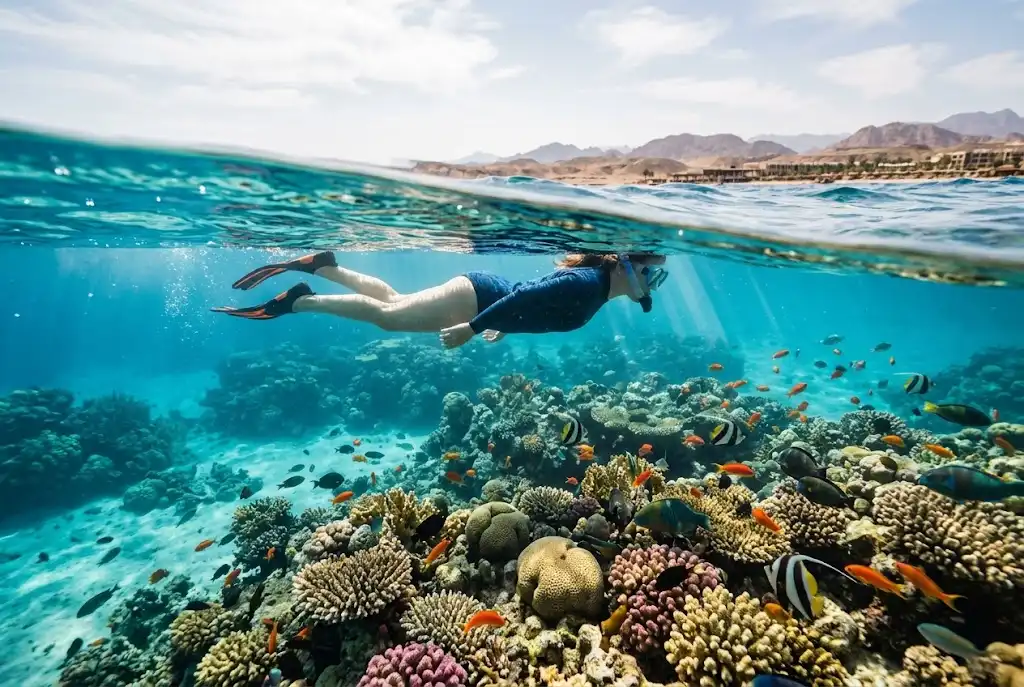
Marsa Alam snorkeling is one of the easiest ways to experience the spectacular underwater world of Egypt’s Red Sea without needing scuba-diving certification. With clear water, colorful coral reefs, shallow lagoons, seagrass meadows and abundant marine life, the southern Red Sea coast offers excellent opportunities for beginners, families, couples and experienced travelers alike.
One of the biggest advantages of snorkeling around Marsa Alam is that many marine experiences are accessible close to shore. You do not necessarily need to spend an entire day on a dive boat to see colorful fish, coral formations or sea turtles. Several bays and protected coastal areas provide relatively shallow environments where visitors can enjoy the Red Sea from the surface.
For travelers interested in going deeper, snorkeling can also be combined with scuba diving. Our Marsa Alam diving guide explains the wider diving experience, including dive sites, marine life, seasons and practical tips.
Whether you are planning a dedicated snorkeling holiday or simply want to add a few underwater adventures to your Egypt itinerary, this guide covers the best places, marine life, seasons, equipment and responsible snorkeling practices to know before you go.
Why Is Marsa Alam Good for Snorkeling?
Marsa Alam’s location along the southern Red Sea coast gives visitors access to a wide variety of marine environments.
The region is known for clear water, coral reefs and diverse marine life. In many shallow coastal areas, you can observe reef fish and coral without descending to significant depths.
This makes snorkeling especially attractive to travelers who are not certified divers or who simply prefer a relaxed experience in the water.
Another advantage is variety. Some locations are known for turtles and seagrass, while others offer colorful coral gardens, lagoons or opportunities to observe dolphins.
The region can therefore suit different types of travelers, from families with older children to underwater photographers looking for colorful subjects.
Best Marsa Alam Snorkeling Spots
There are several well-known snorkeling locations around Marsa Alam. The best choice depends on the marine life you want to see, your swimming ability, weather conditions and whether you prefer a shore-based or boat excursion.
Abu Dabab
Abu Dabab is one of the most popular snorkeling locations around Marsa Alam and is particularly associated with sea turtle encounters.
The bay contains sandy areas, seagrass meadows and coral habitats, creating a varied environment for marine life.
Its relatively accessible setting makes Abu Dabab attractive to families and beginners. Visitors can often explore shallow areas while keeping an eye out for turtles and colorful reef fish.
The possibility of encountering a dugong is another reason the area attracts wildlife enthusiasts, although sightings are naturally unpredictable.
Sharm El Luli
Sharm El Luli is famous for its beautiful beach and clear turquoise water. The combination of white sand, shallow water and reef environments makes it an attractive place for travelers who want to combine beach relaxation with snorkeling.
The relatively clear conditions can make it easier to observe underwater life from the surface.
Visitors should still follow local environmental rules and avoid standing on coral or disturbing marine life.
Marsa Mubarak
Marsa Mubarak is another popular area for marine-life encounters. Its seagrass and reef habitats can attract turtles and other species.
Many excursions to the area are organized by boat, making it possible to combine snorkeling with sightseeing along the coast.
Because the animals are wild, sightings cannot be guaranteed. The best approach is to enjoy the environment without expecting a specific creature to appear.
Sataya Dolphin Reef
Sataya, often known as Dolphin House, is one of the most famous marine destinations in southern Egypt.
The area is associated with spinner dolphins and attracts visitors who want to observe these animals in their natural surroundings.
Snorkeling around Sataya can be an unforgettable experience because of the combination of clear water, coral scenery and marine life.
However, responsible wildlife behavior is extremely important. Dolphins should not be chased, touched or forced into interaction.
Wadi El Gemal
Wadi El Gemal offers more than just underwater scenery. The wider protected area includes desert, mangroves, seagrass and marine habitats.
Snorkeling here can be part of a broader nature-focused excursion, allowing travelers to experience both the Red Sea ecosystem and the surrounding desert landscape.
It is an appealing choice for visitors who want to understand the natural environment rather than simply spend time at a resort beach.
What Marine Life Can You See While Snorkeling?
One of the biggest attractions of Marsa Alam snorkeling is the opportunity to observe marine life from the surface.
The exact species you see depend on the location, season and natural conditions, but several animals are particularly associated with the area.
Sea Turtles
Sea turtles are among the most popular snorkeling encounters around Marsa Alam.
Seagrass areas provide feeding habitats where turtles may sometimes be observed close to shore.
If you encounter a turtle, maintain a respectful distance and allow it to move naturally. Never touch, chase or feed it.
Colorful Reef Fish
Even when larger animals are not present, coral reefs can provide plenty to see.
Schools of small colorful fish move around coral formations, while individual species may hide among rocks and reef structures.
Clear midday water can provide excellent visibility for observing these smaller creatures.
Dolphins
Dolphins may be encountered during excursions to areas such as Sataya.
Watching dolphins in the wild can be a memorable experience, but responsible operators should prioritize animal welfare and avoid encouraging unnatural interactions.
Rays
Rays can sometimes be spotted gliding over sandy seabeds or near reef environments.
Their movement can be particularly impressive when viewed from above in clear shallow water.
Dugongs
The Marsa Alam area is known for occasional dugong encounters, particularly around seagrass habitats.
Dugongs are elusive wild animals, so there is no guarantee of seeing one on a snorkeling trip. Their unpredictable nature is part of what makes an encounter so special.
Is Marsa Alam Snorkeling Suitable for Beginners?
Yes. Snorkeling can be one of the most accessible ways to explore the Red Sea.
Beginners should start with calm, shallow water and choose locations with easy entry points. Organized excursions can also provide guides who understand local conditions and can help visitors stay within safe areas.
If you are not a confident swimmer, consider using a flotation device and staying close to your group or guide.
Do not attempt to swim far offshore simply to reach a particular reef. Conditions can change quickly, and even calm-looking water can involve currents.
Snorkeling From the Beach vs Boat Trips
Marsa Alam offers both shore-based and boat snorkeling experiences.
Beach Snorkeling
Beach snorkeling is convenient and flexible. You can enter the water when conditions are suitable without spending hours traveling by boat.
It is particularly useful for families and travelers who want a relaxed experience.
Some beaches also offer nearby coral and seagrass habitats, making it possible to see marine life without going far from shore.
Boat Snorkeling
Boat excursions provide access to reefs and marine environments farther from the coast.
They can be especially worthwhile for travelers interested in dolphins, turtles or offshore coral formations.
Boat trips often combine several activities, allowing guests to snorkel at multiple locations during the same excursion.
If you are prone to seasickness, consider appropriate preparation before joining a longer boat trip.
Best Time for Marsa Alam Snorkeling
Marsa Alam can be suitable for snorkeling throughout much of the year.
The best period depends on your preferences for water temperature, weather and marine conditions.
Summer offers warm water but can bring very hot temperatures above the surface. Winter generally provides milder air temperatures, although some visitors may find the water cooler.
Spring and autumn can offer a comfortable balance between air and water temperatures.
Visibility and sea conditions are also important. Even during a generally favorable season, wind and waves can temporarily affect snorkeling conditions.
For the best experience, check local weather and sea conditions before heading into the water.
What Should You Take Snorkeling?
You do not need a large amount of equipment for snorkeling.
Basic equipment includes:
- Mask
- Snorkel
- Fins
- Appropriate swimwear
- Rash guard or sun-protective clothing
- Reef-appropriate sun protection
- Reusable water bottle
- Towel
- Dry bag for valuables
A well-fitting mask is particularly important. Water entering the mask can quickly make snorkeling uncomfortable.
If you are joining an organized excursion, check whether masks, fins and other equipment are included before packing your own.
How to Choose a Marsa Alam Snorkeling Tour
If you prefer an organized trip, compare operators carefully before booking.
Look for excursions that:
- Provide suitable safety equipment
- Use experienced guides
- Clearly explain the itinerary
- Avoid overcrowding where possible
- Follow responsible wildlife practices
- Respect protected marine environments
- Clearly explain what is included in the price
Do not select a tour based solely on the cheapest price.
A responsible operator should prioritize both guest safety and protection of the marine environment.
Marsa Alam Snorkeling for Families
Families can find Marsa Alam particularly attractive because many snorkeling locations combine shallow water with abundant marine life.
However, parents should always consider individual swimming abilities and local conditions.
Children should be supervised closely, even in relatively shallow water. Flotation equipment can provide additional confidence but should never replace active supervision.
Choose beaches or excursions with calm conditions and avoid pushing inexperienced swimmers into deeper water.
For families traveling with both divers and non-divers, Marsa Alam can be especially convenient because some locations offer both snorkeling and scuba diving.
Marsa Alam Snorkeling for Underwater Photography
The clear Red Sea water and colorful marine life can provide excellent opportunities for underwater photography.
A waterproof action camera can be enough for casual travelers, while dedicated underwater photographers may use more advanced equipment.
When taking photographs:
- Maintain a safe distance from marine life
- Never touch coral to position yourself
- Avoid chasing animals
- Keep your buoyancy under control
- Do not allow photography to distract you from your surroundings
A good underwater photograph should never come at the expense of the animal or reef being photographed.
Snorkeling and Scuba Diving in the Same Trip
Many travelers combine snorkeling with scuba diving during their Marsa Alam holiday.
Snorkeling provides a relaxed way to explore shallow coral habitats, while scuba diving allows certified divers to explore deeper reefs and underwater walls.
If you are interested in the scuba side of the destination, read our detailed Marsa Alam dive sites guide for information about Elphinstone Reef, Abu Dabab, Fury Shoals, Sataya and other locations.
Combining both activities can be particularly useful for couples and families where not everyone has diving certification.
How Marsa Alam Snorkeling Fits Into a Red Sea Adventure
Snorkeling is just one part of the wider underwater experience available along Egypt’s southern Red Sea coast.
Travelers can combine snorkeling with scuba diving, dolphin excursions, beach time, desert adventures and visits to protected natural areas.
For visitors planning their first trip to the region, understanding how these activities fit together can make itinerary planning much easier.
Our complete underwater adventure guide to Egypt’s Red Sea Riviera provides a broader overview of diving, snorkeling, marine life, seasonal considerations and practical travel advice.
The advantage of combining activities is that you can experience the Red Sea from different perspectives without making the entire trip dependent on one type of excursion.
Responsible Snorkeling in the Red Sea
The coral reefs around Marsa Alam are fragile ecosystems, and visitors have an important role in protecting them.
Never stand on coral, even if the water is shallow. Coral may look like rock, but it is a living ecosystem that can be damaged easily.
Do not touch, chase or feed fish, turtles, dolphins or other marine animals.
Avoid collecting shells, coral or other natural objects as souvenirs.
Reducing plastic waste is also important. Carry a reusable bottle where practical and dispose of rubbish properly.
Choosing environmentally responsible snorkeling operators can help support conservation efforts and encourage better tourism practices.
Common Snorkeling Mistakes to Avoid
Even experienced swimmers can make mistakes when snorkeling.
Swimming Too Far From Shore
Distance from shore can increase quickly. Stay within areas appropriate for your swimming ability and follow guide instructions.
Ignoring Weather Conditions
Wind and waves can make snorkeling uncomfortable or unsafe. Check conditions before entering the water.
Touching Coral
Standing or resting on coral can cause significant damage. Maintain proper body position and buoyancy.
Chasing Marine Life
Animals should never be pursued for photographs. Allow them to approach or move away naturally.
Forgetting Sun Protection
Snorkelers can spend hours exposed to the sun, even when much of their body is in the water. Use suitable protection and take regular breaks.
Marsa Alam Snorkeling vs Diving: Which Is Better?
Neither activity is universally better.
Snorkeling is easier to access and requires less training. It can be ideal for families, beginners and travelers who want a relaxed experience.
Diving provides access to deeper reef environments and is more suitable for people who want to explore underwater walls, formations and marine habitats beyond the surface.
Many visitors choose both.
A morning snorkeling trip followed by a relaxed afternoon can be a great option for casual travelers, while certified divers may dedicate additional days to offshore diving.
Frequently Asked Questions
Is Marsa Alam good for snorkeling?
Yes. Marsa Alam offers clear Red Sea water, coral reefs, seagrass habitats and diverse marine life, making it a strong destination for snorkeling.
Where is the best place for snorkeling in Marsa Alam?
Abu Dabab, Sharm El Luli, Marsa Mubarak and Sataya are among the best-known snorkeling locations, although the ideal choice depends on conditions and the marine life you want to see.
Can you see turtles while snorkeling in Marsa Alam?
Yes. Turtles are associated with several seagrass-rich areas around Marsa Alam, particularly Abu Dabab. However, wildlife sightings are never guaranteed.
Can beginners snorkel in Marsa Alam?
Yes. Beginners can snorkel in suitable shallow and calm areas. Less confident swimmers should use appropriate flotation equipment and stay close to guides or companions.
Can you snorkel and dive at the same location?
Yes. Several coastal areas offer opportunities for both snorkeling and scuba diving.
What should I bring for snorkeling in Marsa Alam?
A mask, snorkel, fins, suitable swimwear, sun protection, water and a towel are useful basics. Organized tours may provide some equipment.
Is snorkeling in Marsa Alam safe?
Snorkeling can be safe when visitors choose appropriate conditions, follow local guidance, avoid strong currents and respect their own swimming abilities.
Final Thoughts
Marsa Alam snorkeling provides an accessible way to discover the remarkable marine environment of Egypt’s southern Red Sea coast.
From turtle-rich seagrass areas around Abu Dabab to the clear waters of Sharm El Luli and the dolphin encounters associated with Sataya, the region offers a variety of experiences for beginners, families and experienced travelers.
The best snorkeling trip is not necessarily the one that visits the most locations. Choosing suitable conditions, using responsible operators and giving marine life plenty of space will make the experience more enjoyable while helping protect the reef.
If you want to explore deeper underwater environments, continue with our Marsa Alam diving guide. For a closer look at individual underwater locations, read our Marsa Alam dive sites guide. And for a complete overview of the region, explore our Egypt Red Sea underwater adventure guide.
