

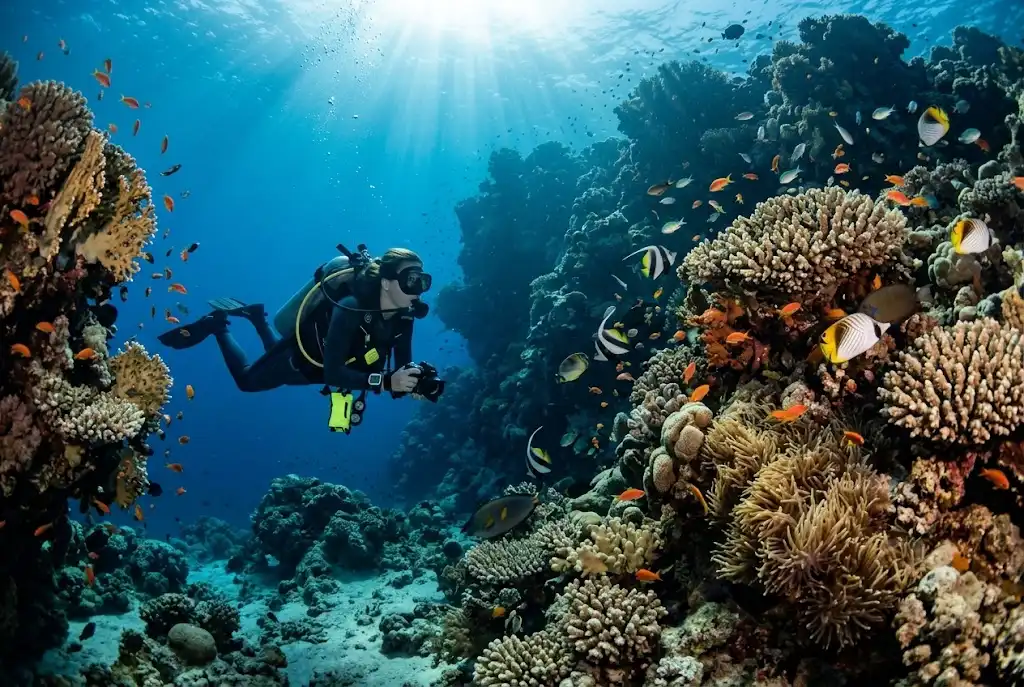
Marsa Alam dive sites offer some of the most diverse underwater experiences on Egypt’s Red Sea coast. From dramatic offshore walls and coral-covered reefs to shallow bays where turtles and colorful reef fish can be spotted, the area has something for beginners, experienced divers and underwater photographers alike.
Located in southern Egypt, Marsa Alam has developed into a popular destination for travelers who want to explore the Red Sea away from some of the larger resort centers. Its combination of clear water, coral ecosystems and access to offshore reefs makes it an excellent base for scuba diving.
The best site for you will depend on your certification, experience, weather conditions and the type of marine life or underwater scenery you want to see. Some locations are suitable for relaxed shore dives, while others are better reserved for experienced divers.
If you are planning a complete underwater holiday, this guide explores the most notable Marsa Alam dive sites and explains what makes each one worth considering.
Why Explore Marsa Alam Dive Sites?
Marsa Alam’s appeal comes largely from the variety of its underwater environments.
Unlike destinations where most diving is concentrated around a limited number of reefs, the wider Marsa Alam region provides access to coastal bays, offshore walls, coral gardens, pinnacles and larger reef systems.
The Red Sea is also known for its clear water and rich marine biodiversity. Depending on the location and season, divers may encounter turtles, dolphins, reef sharks, colorful reef fish, rays and numerous smaller marine species.
Another advantage is the ability to choose between shore diving and boat excursions. Beginners and photographers may prefer accessible coastal locations, while experienced divers can travel farther offshore to more demanding sites.
For travelers who want to understand the broader diving experience before choosing individual sites, our Marsa Alam diving guide covers equipment, seasons, marine life, beginner advice and other practical considerations.
1. Elphinstone Reef
Elphinstone Reef is one of the most famous Marsa Alam dive sites and a major attraction for experienced Red Sea divers.
The offshore reef is known for dramatic walls, steep drop-offs, coral formations and deeper underwater environments. Its reputation is also linked to encounters with oceanic whitetip sharks and other larger marine species.
What Makes Elphinstone Special?
The reef’s underwater topography creates a completely different experience from a shallow coastal bay. Divers can explore walls covered with marine life while observing the changing landscape as the reef drops into deeper water.
The possibility of encountering large pelagic species adds another level of excitement.
However, Elphinstone is not a beginner site in all conditions. Currents, depth and open-water exposure mean divers should have appropriate experience and follow local dive guides closely.
Who Should Dive Elphinstone?
Elphinstone is best suited to experienced and appropriately certified divers.
Before booking, discuss your recent diving history and certification with the operator. Conditions can vary, and a site that is suitable on one day may require different experience levels under different conditions.
2. Abu Dabab
Abu Dabab is one of the most accessible and popular marine areas around Marsa Alam.
The bay is particularly famous for sea turtle encounters and its seagrass habitats. Divers and snorkelers can explore relatively shallow environments while looking for turtles, reef fish and other marine life.
Why Visit Abu Dabab?
One of Abu Dabab’s biggest strengths is its versatility.
A group can include certified divers, beginners and snorkelers, with everyone able to enjoy the same general marine environment.
The bay’s mixture of sand, seagrass and coral habitats also creates opportunities to observe different species without requiring a long offshore journey.
Sea turtle encounters are one of the main attractions, but sightings remain wild and unpredictable.
3. Fury Shoals
Fury Shoals is a large collection of reefs located south of Marsa Alam. Rather than being a single dive site, it is a wider system containing numerous reefs and underwater formations.
The area is known for coral pinnacles, caves, swim-throughs and diverse marine habitats.
What Can Divers Expect?
Fury Shoals appeals particularly to divers who enjoy exploring varied underwater terrain.
Depending on the specific site and conditions, divers may encounter colorful reef fish, turtles, reef sharks and other Red Sea species.
Some locations are more demanding than others, so experience requirements can vary considerably.
How Do You Reach Fury Shoals?
Access depends on the itinerary. Some locations can be visited through longer boat excursions, while liveaboards may provide access to more remote sections of the reef system.
Travelers should ask operators exactly which sites are included rather than assuming that every Fury Shoals trip offers the same experience.
4. Sataya Dolphin Reef
Sataya, often known as Dolphin House, is one of the most recognizable marine destinations in southern Egypt.
The horseshoe-shaped lagoon is associated with spinner dolphins and attracts visitors interested in observing these animals in their natural environment.
Is Sataya Good for Divers?
Sataya can appeal to both divers and snorkelers, although wildlife observation is often the main attraction.
The reef environment provides opportunities to explore coral habitats while the surrounding lagoon creates a memorable setting for marine encounters.
Responsible wildlife practices are essential. Dolphins should never be chased, touched or forced into interaction.
5. Wadi El Gemal
Wadi El Gemal offers a different type of diving experience because it forms part of a much larger protected natural environment.
The region combines desert landscapes with coastal and marine habitats, including coral reefs, seagrass areas and mangroves.
Why Visit Wadi El Gemal?
Travelers interested in nature and conservation can experience both the underwater and terrestrial sides of southern Egypt.
A visit can be combined with other activities in the protected area, creating a more varied itinerary than a diving-only trip.
It is particularly appealing to travelers who want to understand the relationship between the Red Sea’s marine ecosystem and the surrounding desert environment.
6. Marsa Mubarak
Marsa Mubarak is another location associated with marine-life encounters around Marsa Alam.
The area is known for its seagrass and reef habitats and can provide opportunities to encounter turtles and other marine species.
Because conditions and wildlife activity change naturally, visitors should approach the experience with realistic expectations rather than treating specific sightings as guaranteed.
Marsa Mubarak can work well as part of an itinerary that combines diving with snorkeling or boat-based wildlife observation.
7. El Quseir and Northern Reef Areas
Travelers staying around Marsa Alam may also have access to dive sites farther north toward El Quseir, depending on their operator and accommodation location.
These areas provide additional reef environments and can be useful for divers who want to explore beyond the most famous Marsa Alam locations.
The exact sites available will depend on departure point, weather and boat itinerary, so travelers should confirm details before booking.
8. Coastal Shore Reefs
Not every memorable Marsa Alam dive requires an offshore boat.
Several coastal areas offer shore-based diving, allowing visitors to explore reefs directly from accessible bays.
Shore dives can be particularly useful for:
- Beginners
- Refresher dives
- Underwater photographers
- Divers who prefer shorter sessions
- Travelers combining diving with other activities
The experience can also be more flexible because there is no need to spend a large part of the day traveling by boat.
Marsa Alam Dive Sites for Beginners
Not all of the region’s famous sites are suitable for new divers.
Beginners should prioritize locations with:
- Shallow water
- Easy entry and exit
- Limited current
- Good visibility
- Suitable training conditions
- Experienced instructors
A reputable dive center should recommend sites based on your certification and experience rather than simply selecting the most famous location.
If you are new to scuba diving, start with a suitable introductory or beginner-friendly site before considering deeper offshore reefs.
Best Marsa Alam Dive Sites for Experienced Divers
Experienced divers have access to a much wider range of options.
Elphinstone Reef is an obvious choice for those interested in dramatic walls and potential pelagic encounters. Fury Shoals can appeal to divers who enjoy varied reef structures and more remote environments.
Other offshore sites may offer stronger currents, deeper sections or more challenging entries.
Advanced diving should always be planned around actual conditions rather than reputation alone. A famous site is not automatically the best choice on every day.
Marsa Alam Dive Sites for Marine Life
If marine life is your priority, different locations offer different possibilities.
For Turtles
Abu Dabab and other seagrass-rich coastal areas are associated with turtle encounters.
For Dolphins
Sataya is particularly well known for opportunities to observe spinner dolphins.
For Sharks
Elphinstone has a reputation for potential encounters with oceanic whitetip sharks and other pelagic species.
For Reef Fish
Almost any healthy coral environment can provide excellent opportunities to observe colorful reef fish, especially around coral walls and formations.
For Macro Photography
Shallow and sheltered reefs can be rewarding for photographers who prefer small creatures such as nudibranchs, pipefish and other cryptic species.
Remember that marine life is wild. No responsible operator can guarantee a particular animal sighting.
Shore Diving or Boat Diving: Which Is Better?
The answer depends on the type of experience you want.
Shore Diving
Shore diving offers convenience and flexibility. You spend less time traveling and more time near the reef.
It can be ideal for beginners, photographers and divers who want several shorter dives.
Boat Diving
Boat trips open access to offshore reefs and more remote locations.
They can provide more dramatic underwater environments and access to sites that cannot be reached from shore.
The downside is that boat excursions may involve longer journeys and can be affected by sea conditions.
For many visitors, combining both options provides the best overall experience.
Best Time to Visit Marsa Alam Dive Sites
Diving is possible throughout much of the year, but conditions change seasonally.
Summer typically brings warmer water and hot air temperatures. Winter can provide comfortable conditions above the water but may require additional exposure protection for some divers.
Spring and autumn can provide a useful balance between air and water temperatures.
If you have a particular site in mind, ask your dive operator about seasonal conditions, visibility and the likelihood of suitable sea conditions before finalizing your itinerary.
How to Choose the Right Dive Site
Choosing a site based only on popularity can lead to a disappointing experience.
Instead, consider:
Your Certification
Choose sites that match your qualification and experience.
Your Recent Dive History
A diver who has not been underwater for several years may benefit from a refresher before attempting demanding sites.
Weather Conditions
Wind, waves and currents can affect whether a site is suitable on a particular day.
Your Main Interest
Decide whether you are most interested in coral, turtles, sharks, dolphins, photography or underwater topography.
Your Group
If your group includes beginners and experienced divers, choose locations that offer something for everyone.
What to Pack for Diving in Marsa Alam
Most professional operators can provide rental equipment, but there are several personal items worth considering.
Useful items include:
- Diving certification
- Dive log if required
- Personal mask
- Fins
- Appropriate wetsuit
- Reef-safe sun protection
- Reusable water bottle
- Dry bag
- Towel
- Underwater camera if desired
- Motion-sickness medication if needed for boat trips
Do not forget to leave room for normal travel essentials because diving equipment can quickly become bulky.
Responsible Diving at Marsa Alam Dive Sites
The quality of Marsa Alam’s reefs depends on responsible behavior.
Never stand on coral or use reef structures to stabilize yourself. Keep your buoyancy under control and make sure equipment does not drag across the reef.
Do not touch marine animals or remove coral, shells or other natural objects.
When photographing turtles, dolphins or other wildlife, maintain a respectful distance and never chase an animal to get a better picture.
Choosing operators that emphasize conservation can also help support sustainable tourism in the region.
Diving and Snorkeling Around Marsa Alam
Some of the region’s most accessible marine areas are suitable for both scuba diving and snorkeling.
This makes Marsa Alam particularly convenient for families and mixed groups. Certified divers can explore deeper sections while other travelers enjoy shallow coral gardens and seagrass habitats.
If you are planning to include both activities, our Marsa Alam snorkeling guide covers the best snorkeling environments, marine life and practical planning advice.
The combination of diving and snorkeling also allows travelers to experience the same reef from two different perspectives.
Building a Complete Red Sea Underwater Itinerary
The best Marsa Alam trip does not necessarily involve visiting as many dive sites as possible.
Instead, build an itinerary around variety.
For example, you could combine:
- A relaxed shore dive
- A turtle-focused trip
- An offshore reef excursion
- A snorkeling day
- A desert or cultural experience
This approach gives you time to enjoy the destination without spending every day rushing between boat departures.
For travelers who want a wider overview of the region, our Egypt Red Sea underwater adventure guide covers the broader combination of diving, snorkeling, marine life, seasons and practical travel planning.
Frequently Asked Questions
What are the best Marsa Alam dive sites?
Elphinstone Reef, Abu Dabab, Fury Shoals, Sataya and coastal reef areas are among the most notable locations associated with diving around Marsa Alam.
Which Marsa Alam dive site is best for beginners?
Beginner divers should focus on sheltered, shallow sites with suitable conditions rather than automatically choosing famous offshore locations. A qualified local instructor can recommend the best option.
Is Elphinstone Reef suitable for beginners?
Elphinstone can involve deeper water, currents and open-water conditions, so it is generally more appropriate for experienced divers who meet the site’s requirements.
Can you see turtles at Marsa Alam dive sites?
Yes, turtles are associated with several marine areas around Marsa Alam, particularly seagrass habitats such as those around Abu Dabab. Sightings are never guaranteed.
Can you dive and snorkel at the same location?
Yes. Several coastal locations provide opportunities for both activities, making Marsa Alam suitable for groups with different interests.
Are Marsa Alam dive sites open all year?
Diving is possible throughout much of the year, but individual sites can be affected by weather, sea conditions and seasonal factors.
Do I need to bring my own diving equipment?
Not necessarily. Many professional operators provide rental equipment. However, experienced divers may prefer to bring personal equipment such as masks or dive computers.
Final Thoughts
The variety of Marsa Alam dive sites is one of the biggest reasons the region has become an important destination for Red Sea diving.
From the dramatic walls of Elphinstone Reef and the turtle-rich environment of Abu Dabab to the extensive reef systems of Fury Shoals and the dolphin encounters associated with Sataya, each location offers something different.
The right choice depends on your certification, experience, interests and current sea conditions. Beginners should prioritize accessible sites with suitable instruction, while experienced divers can consider more demanding offshore environments.
Most importantly, approach every dive responsibly. Respect marine life, protect coral reefs and follow the advice of qualified local professionals.
For the broader diving experience, continue with our Marsa Alam diving guide. If you want to add surface-level exploration to your trip, read our Marsa Alam snorkeling guide. And for a complete overview of the destination’s underwater experiences, see the Egypt Red Sea underwater adventure guide.
