

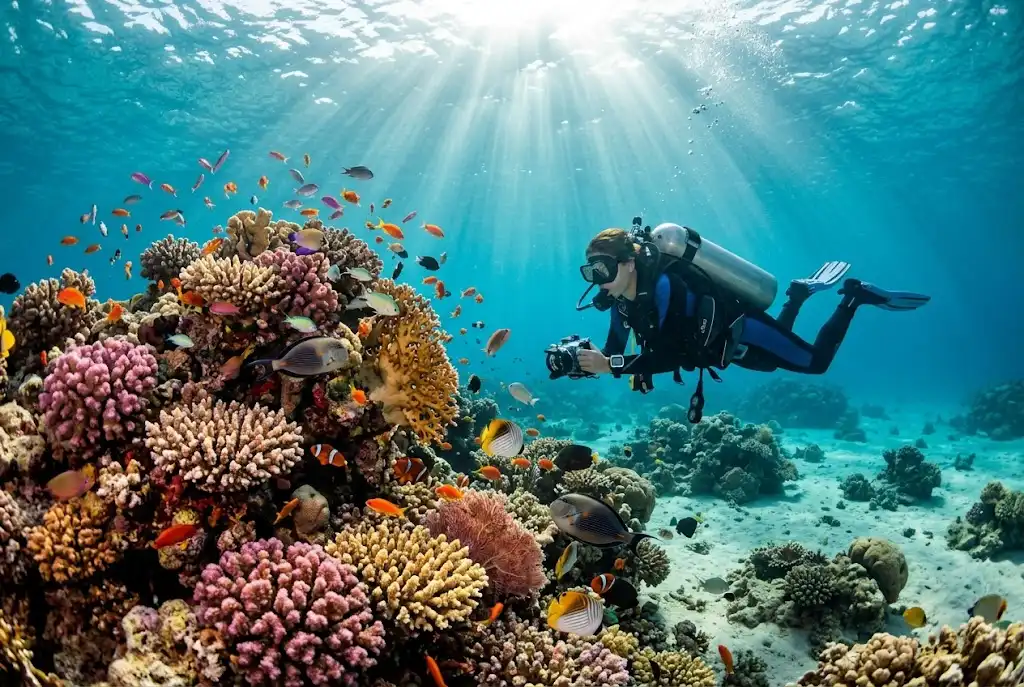
Marsa Alam diving is one of the most rewarding ways to experience Egypt’s southern Red Sea coast. Known for clear water, vibrant coral reefs, diverse marine life and access to famous offshore sites, Marsa Alam attracts everyone from first-time divers to experienced scuba enthusiasts looking for unforgettable underwater encounters.
Unlike a traditional beach holiday where most activities remain above the surface, diving in Marsa Alam provides a chance to explore an entirely different side of Egypt. Colorful reef fish, sea turtles, dolphins, coral gardens and dramatic underwater walls are among the attractions that make this part of the Red Sea so appealing.
The area also offers plenty of variety. Beginners can start with calm, shallow sites, while certified and experienced divers can explore offshore reefs and deeper environments. Diving can also be combined with snorkeling, desert excursions and other activities to create a complete Egyptian holiday.
If you are planning a trip to the region, this guide explains what makes Marsa Alam special, what marine life you may encounter, when to visit and how to choose the right diving experience.
Why Choose Marsa Alam for Diving?
Marsa Alam sits along Egypt’s southern Red Sea coastline, an area widely recognized for its warm waters, coral ecosystems and rich marine biodiversity. Its location provides access to both sheltered coastal areas and offshore reefs, giving visitors several ways to explore the underwater environment.
One of the biggest advantages of the region is the variety of diving experiences. Depending on your certification and comfort level, you can choose between shore dives, daily boat trips, shallow reefs and more demanding offshore sites.
The area is also attractive to travelers who prefer a quieter atmosphere. While destinations such as Hurghada and Sharm El Sheikh are well established, Marsa Alam is often associated with a more nature-focused experience.
Travelers planning a broader marine holiday can also combine scuba diving with snorkeling and wildlife encounters. For a complete overview of the region’s underwater attractions, seasons and practical travel advice, see this complete underwater adventure guide to Egypt’s Red Sea Riviera.
What Makes Marsa Alam Diving Special?
Several factors contribute to the popularity of diving around Marsa Alam.
The Red Sea is known for relatively warm water, strong visibility and an impressive variety of coral and fish species. The southern coastline also includes protected natural areas where marine ecosystems have benefited from conservation measures.
Another major advantage is the range of underwater environments. A single trip can include shallow coral gardens, sandy-bottomed bays, steep reef walls and offshore pinnacles.
This variety means that Marsa Alam can work for different types of divers. Someone completing their first introductory dive can have a completely different experience from an advanced diver visiting an offshore wall, yet both can enjoy the same destination.
Best Dive Sites Around Marsa Alam
Marsa Alam is surrounded by numerous dive sites, ranging from easy coastal locations to challenging offshore reefs. Conditions can change according to weather, currents and season, so divers should always follow local guidance.
For a dedicated overview of the region’s most important locations, including Elphinstone Reef, Abu Dabab and Fury Shoals, see our guide to Marsa Alam dive sites.
Elphinstone Reef
Elphinstone Reef is arguably the most famous dive site associated with Marsa Alam. Located offshore, the reef features dramatic walls, coral formations and deeper sections that appeal particularly to experienced divers.
The site has gained international attention for potential encounters with oceanic whitetip sharks and other pelagic species. However, conditions can include currents and open-water exposure, meaning divers should have appropriate experience before attempting the site.
Following the instructions of local guides is especially important at offshore sites such as Elphinstone.
Abu Dabab
Abu Dabab is one of the most accessible marine areas around Marsa Alam and is particularly famous for sea turtle encounters.
The bay contains sandy areas, seagrass habitats and coral formations, making it interesting for both divers and snorkelers. Its accessible nature also makes it useful for groups where some travelers want to dive while others prefer to stay close to the surface.
The possibility of seeing turtles in their natural environment is one of the area’s major attractions, although wildlife encounters can never be guaranteed.
Fury Shoals
Fury Shoals is a large reef system south of Marsa Alam containing numerous individual dive sites. The area is known for coral formations, pinnacles, caves and swim-throughs.
Because the reef system covers a large area, accessing different locations can require longer excursions or liveaboard trips. Divers interested in exploring Fury Shoals should discuss their certification and experience with the operator before booking.
The variety of underwater landscapes makes the area particularly appealing to experienced divers looking for something beyond standard coastal dives.
Sataya
Sataya, also known as Dolphin House, is famous for its lagoon and opportunities to observe spinner dolphins.
The area attracts both divers and snorkelers, although dolphin encounters are often the main attraction. Responsible operators should allow the animals to behave naturally and avoid forcing close interactions.
The combination of coral scenery, clear water and marine life can make Sataya a memorable part of a southern Red Sea itinerary.
Wadi El Gemal
Wadi El Gemal offers a different perspective on the natural environment around Marsa Alam. The protected area includes desert landscapes, coastal habitats, mangroves, seagrass and marine ecosystems.
Visitors can combine underwater activities with land-based exploration, making the area particularly interesting for travelers who want to experience more than just resort life.
Marine Life You Can See While Diving in Marsa Alam
Marine biodiversity is one of the main reasons people choose Marsa Alam diving. The exact species you encounter will depend on the site, season, weather and natural conditions, but the region offers plenty to discover.
Sea Turtles
Sea turtles are among the most memorable marine animals found around Marsa Alam. Seagrass meadows provide important feeding areas, particularly around coastal locations such as Abu Dabab.
Divers should maintain a respectful distance and never touch, chase or feed turtles.
Dolphins
Dolphins may be encountered around offshore reefs and areas such as Sataya. Seeing wild dolphins in their natural environment can be an unforgettable experience.
However, these are wild animals and sightings are never guaranteed. Responsible tourism means allowing dolphins to determine the distance and duration of any encounter.
Reef Fish
Colorful reef fish can be found throughout many of the area’s coral habitats. Schools of small fish often move around reef formations, creating impressive underwater scenes.
Larger reef species may also appear around deeper sections and reef edges.
Sharks and Pelagic Species
Experienced divers may have opportunities to encounter sharks and other larger pelagic animals at offshore sites.
Elphinstone Reef is particularly associated with shark encounters, although sightings are naturally unpredictable.
A responsible diver should never treat a particular animal sighting as a guaranteed part of a trip.
Macro Marine Life
Marsa Alam is also interesting for divers who prefer smaller creatures. Patient observers may discover nudibranchs, octopuses, pipefish, frogfish and other small reef inhabitants.
Underwater photographers can spend considerable time examining coral formations for these less obvious subjects.
Is Marsa Alam Diving Suitable for Beginners?
Yes, although beginners need to choose suitable locations and conditions.
The region includes sheltered bays and shallow reefs that can be useful for introductory dives and training. Qualified instructors can teach basic skills and gradually introduce new divers to underwater environments.
Beginners should not assume that every Marsa Alam dive site is equally easy. Offshore locations can involve stronger currents, greater depths and more demanding conditions.
When booking a trip, provide the operator with accurate information about your certification and recent diving experience. A reputable dive center should recommend sites based on your actual ability rather than simply selling the most expensive excursion.
Shore Diving vs Boat Diving
Both shore and boat diving have their own advantages.
Shore Diving
Shore dives can be convenient because they avoid long boat journeys and provide relatively easy access to selected coastal reefs.
They can be particularly attractive to beginners, photographers and divers who prefer shorter sessions.
Shore diving also allows visitors to spend more time exploring at their own pace when conditions and site rules permit.
Boat Diving
Boat trips provide access to offshore reefs that cannot easily be reached from land.
These sites may feature deeper walls, larger reef formations and different marine habitats. Some trips can involve longer crossings, so travelers prone to seasickness should prepare appropriately.
Experienced divers often choose boat excursions to access some of the area’s most famous offshore locations.
Best Time for Marsa Alam Diving
Marsa Alam can be visited for diving throughout much of the year. The best time depends on your preferred water temperature, weather conditions and the type of marine experience you want.
Summer generally brings warmer water and hot weather. Winter can offer more comfortable air temperatures, although some divers may prefer additional exposure protection.
Spring and autumn can provide a balanced combination of water and air temperatures and can be attractive for travelers who want to combine diving with sightseeing.
Rather than choosing a date based only on general climate information, check current local sea conditions and discuss your preferred dive sites with a reputable operator.
What Equipment Do You Need?
Most established dive operators can provide standard scuba equipment, so travelers do not necessarily need to transport a complete personal setup.
Typical equipment includes:
- Mask and snorkel
- Fins
- Wetsuit or suitable exposure protection
- Buoyancy control device
- Regulator
- Scuba cylinder
- Weight system
- Dive computer
- Surface marker buoy where appropriate
If you are an experienced diver with personal equipment you prefer to use, check your airline’s baggage allowance before traveling.
For occasional divers, equipment rental can be a practical alternative to carrying bulky gear internationally.
How to Choose a Marsa Alam Dive Operator
Choosing the right operator is an important part of planning a safe and enjoyable trip.
Before booking, look for a company that:
- Employs qualified and experienced dive professionals
- Maintains its equipment properly
- Explains site conditions clearly
- Matches dives to certification and experience
- Follows established safety procedures
- Provides appropriate equipment
- Maintains reasonable group sizes
- Respects marine-life protection guidelines
- Clearly explains prices and inclusions
The cheapest option is not necessarily the best option. Safety, guide experience, equipment condition and responsible practices should all influence your decision.
Tips for a Better Marsa Alam Diving Experience
A few simple preparations can make your trip easier and more enjoyable.
Check Your Certification
Make sure your certification and recent experience match the sites you intend to visit.
If you have not dived for a long time, consider a refresher session before attempting demanding offshore sites.
Listen to Local Dive Guides
Local guides understand the area’s currents, entry points, weather and site-specific conditions. Their recommendations can help you avoid unnecessary risks.
Plan Enough Time Between Dives
Do not rush from one demanding activity to another. Follow your dive computer, training and operator’s recommendations for surface intervals and safe diving practices.
Stay Hydrated
The Egyptian Red Sea coast can be hot and dry, especially during summer. Drink enough water throughout the day and pay particular attention to hydration when spending long periods outdoors.
Protect Yourself From the Sun
Boat decks and beaches provide strong sun exposure. Suitable clothing, shade and responsible sun protection can help prevent discomfort during your trip.
Responsible Diving in Marsa Alam
The health of the Red Sea ecosystem depends heavily on responsible tourism.
Divers should never stand on or touch coral. Good buoyancy control helps prevent fins, tanks and other equipment from accidentally damaging reef structures.
Do not collect coral, shells or marine animals. Avoid feeding wildlife and never chase turtles, dolphins or other creatures for photographs.
Choosing environmentally responsible operators can also make a difference. Look for businesses that follow conservation guidelines and educate guests about appropriate behavior around marine life.
Reducing plastic waste is another simple step. Carry reusable water bottles where practical and dispose of waste properly.
Protecting the reef is not simply an environmental concern. It helps ensure that future visitors can continue to experience the same underwater beauty.
Marsa Alam Diving and Snorkeling
One of the advantages of visiting Marsa Alam is that scuba diving does not have to be the only water activity on your itinerary.
Many coastal locations are suitable for snorkeling as well as diving. This makes the destination particularly convenient for families, couples and groups where travelers have different interests or experience levels.
Snorkelers can explore shallow coral gardens and seagrass areas while certified divers descend to deeper reefs.
If you are interested specifically in surface-level exploration, our Marsa Alam snorkeling guide covers the best snorkeling environments, marine life and practical tips for planning this part of your trip.
Combining Diving With a Complete Red Sea Adventure
A Marsa Alam trip can include much more than scuba diving.
Travelers can combine underwater activities with snorkeling, dolphin encounters, beach relaxation, desert excursions and exploration of protected coastal landscapes.
This makes Marsa Alam a useful destination for people who want an experience that combines adventure and relaxation rather than spending an entire holiday around one resort activity.
If you are planning a wider trip around Egypt’s southern Red Sea coastline, our complete underwater adventure guide to Egypt’s Red Sea Riviera provides a broader overview of diving, snorkeling, marine life, seasons, logistics and responsible travel.
Marsa Alam Diving vs Snorkeling: Which Is Better?
There is no single answer because the two activities offer different experiences.
Scuba diving allows certified divers to explore deeper reef formations, walls and underwater habitats that are inaccessible to surface swimmers.
Snorkeling requires less equipment and training and can be ideal for families, beginners or travelers who simply want to observe shallow coral reefs and marine life.
For mixed groups, combining both activities can be an excellent option. Divers can explore deeper sites while other travelers enjoy the same marine environment from the surface.
Frequently Asked Questions About Marsa Alam Diving
Is Marsa Alam good for scuba diving?
Yes. Marsa Alam offers clear Red Sea waters, coral reefs, diverse marine life and a range of dive environments suitable for different levels of experience.
What is the most famous dive site near Marsa Alam?
Elphinstone Reef is one of the most famous sites in the region, particularly among experienced divers interested in dramatic reef walls and potential shark encounters.
Can beginners go diving in Marsa Alam?
Yes. Sheltered bays and shallow reef environments can be suitable for introductory dives and beginner training. A qualified instructor should select locations according to the diver’s experience and conditions.
Can you see turtles while diving in Marsa Alam?
Yes, turtles are associated with several marine habitats around Marsa Alam, particularly seagrass areas. However, wildlife sightings are never guaranteed.
Is shore diving available in Marsa Alam?
Yes. Several coastal locations allow shore diving, while boat trips provide access to more distant offshore reefs.
What is the best season for Marsa Alam diving?
Diving is possible throughout much of the year. The best period depends on your preferred water temperature, weather conditions and the type of experience you want.
Is Marsa Alam suitable for experienced divers?
Yes. Experienced divers can explore offshore reefs, deeper sites and challenging environments such as Elphinstone Reef and Fury Shoals.
Final Thoughts
Marsa Alam diving offers an excellent way to discover the underwater side of Egypt’s southern Red Sea coast. From shallow coastal reefs and sea turtle habitats to dramatic offshore walls and potential encounters with larger marine species, the area provides experiences for a wide range of divers.
The best trip starts with choosing sites that match your certification and experience, selecting a reputable operator and respecting the marine environment throughout every dive.
Scuba diving can also be combined with snorkeling, wildlife encounters, beaches and desert activities, allowing travelers to experience more than just the underwater world.
For a broader itinerary, explore the complete underwater adventure guide to Egypt’s Red Sea Riviera, then use our Marsa Alam dive sites guide and Marsa Alam snorkeling guide to plan specific activities around your interests.
