

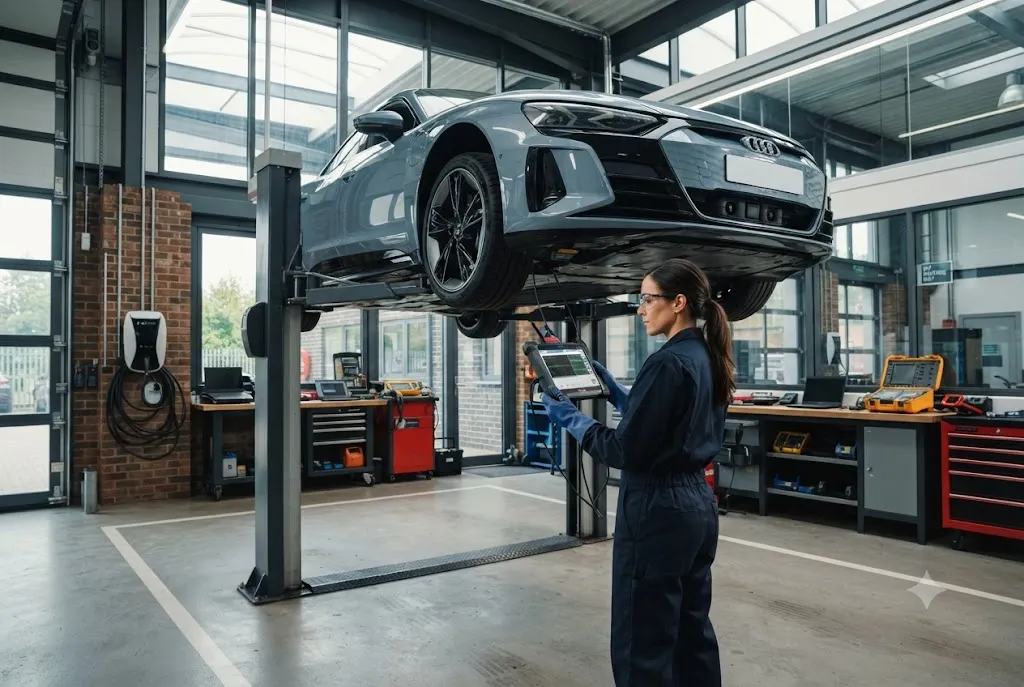
EV servicing is changing the way vehicles are maintained across the UK. Electric cars have fewer conventional mechanical components than petrol and diesel vehicles, but that does not mean they require no maintenance. Instead, the focus is shifting towards battery systems, high-voltage components, software, electrical diagnostics, braking systems, tyres and specialist safety procedures.
This change is creating both opportunities and challenges for garages. EV mechanics need a different combination of technical knowledge and safety training, while motorists increasingly need to understand which workshops are equipped to maintain electric vehicles properly. For the UK’s automotive aftermarket, this is more than a change in vehicle technology. It is a change in the skills, equipment and services that workshops need to remain competitive.
Why EV Servicing Is Different
Traditional cars rely heavily on engines, transmissions, exhaust systems and other mechanical components that require regular inspection and maintenance. Electric vehicles use an electric drivetrain instead, removing or reducing the need for many conventional engine-related services.
There is no engine oil to replace in a battery-electric vehicle, and there is no conventional exhaust system requiring routine maintenance. However, EVs contain sophisticated electrical and electronic systems that require appropriate diagnostic procedures.
The battery pack is one of the most important components. It stores a large amount of electrical energy and works with systems controlling power delivery, temperature and charging. Other components, such as electric motors, inverters, onboard chargers and high-voltage cabling, also form part of the vehicle’s propulsion system.
Consequently, EV servicing is less about replacing traditional engine consumables and more about checking the condition and operation of complex electrical and electronic systems.
EV Mechanics Need New Skills
The growth of electric vehicles is increasing demand for technicians who understand high-voltage vehicle systems.
EV mechanics need to know how electric drivetrains work, how to identify electrical faults and how to follow appropriate safety procedures when working around high-voltage components. Diagnostic equipment also becomes increasingly important because many vehicle faults are monitored electronically.
Training is therefore becoming an important competitive factor for workshops. A garage cannot simply begin servicing electric vehicles because it already services conventional cars. Its technicians need the appropriate knowledge, equipment and working procedures.
For large garage chains, this can create an advantage because larger networks may have greater resources for centralised training and equipment investment. However, specialist independent garages can also compete effectively by developing deep expertise in electric vehicles.
Battery Diagnostics Will Become More Important
Battery diagnostics are likely to become one of the defining areas of EV maintenance.
An electric vehicle’s battery is not simply a single component that is either working or broken. Its performance can be influenced by factors such as temperature, charging behaviour, age, usage and the condition of individual battery cells and related systems.
Accurate diagnostics can help determine whether a vehicle is operating normally or whether further investigation is required. For customers, this information can become particularly important as EVs age and their battery condition becomes a consideration when buying or selling a used vehicle.
Workshops that can provide reliable battery assessments may therefore develop a valuable service offering. However, technicians must use appropriate diagnostic procedures rather than making unsupported assumptions about battery health.
Electric Vehicle Maintenance Still Covers the Basics
One common misconception is that an electric vehicle needs almost no maintenance. While the drivetrain can reduce some traditional servicing requirements, many components still require inspection.
Electric vehicles still use tyres, brakes, suspension components, steering systems, lights, wipers and other equipment found on conventional vehicles. These components remain subject to wear and environmental conditions.
In fact, the characteristics of EVs can create specific considerations. Electric cars can be heavier than comparable petrol vehicles because of their battery packs, while instant torque can influence how a vehicle is driven. Tyre selection, condition and wear therefore remain important.
Brake systems also deserve attention. Regenerative braking can reduce reliance on conventional friction brakes during some driving conditions, but brake components still need appropriate inspection and maintenance.
EV Garages Need Appropriate Equipment
The physical workshop environment is changing alongside technician skills.
EV garages need appropriate equipment for working safely around high-voltage systems. Depending on the services offered, this can include suitable diagnostic equipment, insulated tools, protective equipment and procedures for isolating vehicle electrical systems.
Workshops may also need dedicated areas or processes for handling damaged electric vehicles. The exact requirements depend on the vehicle, repair and applicable safety procedures.
This investment can represent a significant barrier for smaller workshops. Yet it can also create an opportunity. Garages that establish credible EV capabilities early can position themselves as specialist providers in their local markets.
Hybrid Servicing Is an Important Bridge
Hybrid vehicles occupy an important position between traditional combustion vehicles and fully electric cars.
The Hybrid servicing requires technicians to understand both conventional mechanical systems and electric propulsion components. A hybrid may contain an internal combustion engine, electric motor, high-voltage battery and associated electronic control systems.
This means hybrid vehicles can provide workshops with an important learning pathway. Experience with hybrid systems can help technicians develop familiarity with electrical diagnostics and high-voltage safety before working on increasingly complex battery-electric vehicles.
However, workshops should still treat every vehicle according to its specific technical and safety requirements. Hybrid knowledge does not automatically mean that a technician is qualified for every EV repair.
Charging Systems Are Part of the Customer Experience
EV ownership also creates a connection between the vehicle and its charging system that does not exist in the same way for conventional cars.
Drivers may experience issues involving home charging equipment, charging cables, vehicle charging ports or the vehicle’s onboard charging system. While not every garage will provide charger installation or electrical-home services, technicians increasingly need to understand how charging interacts with the vehicle.
For workshops, this creates opportunities to educate customers. A garage may not be responsible for installing a domestic charger, but it can explain whether a charging-related warning appears to be associated with the vehicle or requires specialist electrical investigation.
As EV ownership expands, charging systems are likely to become an increasingly familiar part of automotive conversations.
Software Is Becoming Part of Vehicle Maintenance
Electric vehicles demonstrate how closely automotive maintenance is becoming connected to software.
Modern EVs can use software to manage battery performance, charging, energy consumption, thermal systems and other vehicle functions. Diagnostic processes may therefore involve electronic control units and software-related information rather than only physical components.
This creates a different role for the technician. Mechanical ability remains valuable, but diagnostic thinking and digital competence become increasingly important.
For automotive service companies, this means technician training cannot remain static. The workshop of the future needs people who can combine mechanical understanding with electrical and digital knowledge.
Tyres and Alignment Still Matter on EVs
Electric vehicle technology does not remove the need for fundamental vehicle maintenance.
Tyres remain one of the most important safety components, and their condition can influence grip, handling, braking and energy efficiency. EV owners should therefore continue to pay attention to tread depth, pressure, damage and uneven wear.
Wheel geometry can also affect how tyres wear and how a vehicle behaves on the road. Proper wheel alignment can help address alignment-related issues when a vehicle develops uneven tyre wear, steering concerns or other relevant symptoms.
Likewise, modern tyre services are likely to remain an important part of EV ownership. As EV-specific tyres and vehicle requirements develop, workshops need to understand the specifications appropriate for each vehicle.
EV Servicing and the Used-Car Market
The growth of the used EV market could make servicing expertise even more valuable.
A new EV owner may rely heavily on manufacturer support, but a second or third owner may look for independent maintenance options that provide competitive pricing and convenient local access.
Battery condition is also likely to become an important consideration when evaluating older electric vehicles. Customers may want greater confidence about battery performance before purchasing a used EV, particularly when the vehicle has accumulated significant mileage.
This could create demand for independent battery health assessments and specialist EV inspections, provided these services are performed using appropriate methods and clearly explained to customers.
Can Independent Garages Compete?
Independent workshops are not necessarily at a disadvantage in the EV transition.
Large garage networks can benefit from scale, but independent garages can move quickly when they identify a profitable specialist opportunity. A workshop that invests in technician training, appropriate equipment and strong local marketing can establish itself as an EV specialist without needing hundreds of locations.
The key is credibility. Customers need confidence that the garage genuinely understands electric vehicles rather than simply adding an “EV” service page to its website.
Evidence of training, appropriate equipment, clear service descriptions and professional communication can help establish that credibility.
Why EV Safety Cannot Be Treated Like Routine Servicing
High-voltage systems require appropriate safety procedures. Workshops must ensure that technicians have the correct training and follow the relevant procedures for the vehicle and repair being undertaken.
This is particularly important when a vehicle has been involved in a collision or has suffered damage that could affect its electrical systems. A damaged EV should not be treated as though it were simply a conventional car with a damaged exterior.
Workshops should follow applicable manufacturer and industry guidance and avoid taking unnecessary risks with high-voltage components.
What Should Drivers Look For in an EV Garage?
Choosing an EV garage involves more than finding the cheapest advertised service.
Drivers can consider several practical questions:
- Does the workshop explicitly provide EV or hybrid services?
- Do its technicians have appropriate EV training?
- Does the garage have suitable diagnostic equipment?
- Can it explain what work is required and why?
- Does it understand the vehicle manufacturer’s service requirements?
- Does it have appropriate procedures for high-voltage systems?
- Can it provide clear information about battery-related diagnostics?
Customers should also distinguish between routine maintenance and specialist high-voltage repairs. A garage may be perfectly capable of handling tyres, brakes and suspension on an EV while referring complex battery or electrical work to a specialist.
How Garage Chains Can Use EV Expertise as an Advantage
For established garage networks, EVs represent both a challenge and an opportunity.
Networks can use their existing locations to make specialist EV services accessible across a wider geographical area. Centralised training can help improve consistency, while shared diagnostic resources and technical support can help individual branches deal with unfamiliar problems.
However, customers will expect the advertised capability to exist at the location they choose. A network that claims EV expertise but cannot provide appropriate support locally risks damaging its reputation.
This connects directly with the wider question of what makes automotive service companies trustworthy. EV capability is increasingly becoming part of that trust equation.
The Future of EV Servicing in the UK
EV servicing is likely to become more specialised rather than disappearing.
Electric vehicles may require fewer conventional maintenance tasks, but the services that remain can become more technically demanding. Battery diagnostics, electrical systems, software, charging components, thermal management, tyres, brakes and suspension will all continue to require appropriate attention.
Workshops that invest in people and technology will be better positioned to capture this changing demand. Those that delay may find that customers increasingly choose specialist EV garages instead.
The biggest change may ultimately be the definition of a good automotive technician. Mechanical expertise will remain important, but electrical knowledge, diagnostics, software awareness and safety procedures will become increasingly central to the profession.
Final Thoughts
EV servicing is not simply a smaller version of traditional car servicing. It represents a different maintenance model built around electrical systems, diagnostics, battery technology and new safety requirements.
For UK motorists, this means choosing a workshop based on capability rather than familiarity alone. For garages, it means investing in training, equipment and credible EV expertise before customer demand becomes impossible to ignore.
The transition will not eliminate the traditional garage. Instead, it will change what a modern garage needs to know. The workshops that successfully combine established maintenance skills with electric vehicle expertise are likely to be among the strongest competitors in the next generation of the UK automotive aftermarket.
