

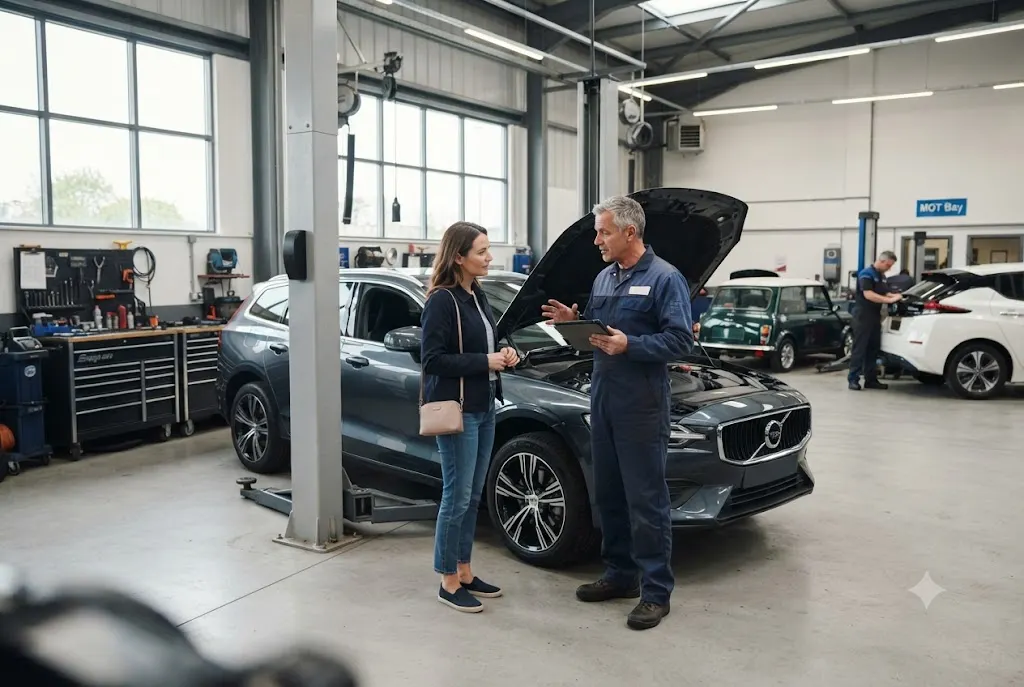
Automotive service companies operate in a market where trust can matter just as much as price. When a vehicle needs a repair, service or safety inspection, customers want confidence that the diagnosis is accurate, the work is necessary and the final bill will be fair. That is why reputation, technical expertise and transparent communication have become increasingly important across the UK automotive aftermarket.
From independent garages to franchise garages, authorised service centres and large workshop groups, different businesses use different models to win customer loyalty. Yet the most trusted automotive service companies tend to share several characteristics. They make vehicle maintenance easier to understand, communicate clearly and give customers reasons to return.
What Makes Automotive Service Companies Trustworthy?
Trust begins with consistency. A customer may not know exactly what is wrong with a vehicle, but they can judge how professionally a workshop handles the problem.
A trustworthy garage should explain the issue in understandable language, identify the work that genuinely needs attention and provide a clear estimate before carrying out significant repairs. Customers also benefit when a workshop explains which repairs are urgent and which issues can reasonably be monitored.
That approach matters because automotive maintenance is different from buying many ordinary consumer products. Drivers often rely on a technician’s expertise to make decisions about brakes, tyres, steering, suspension, electrical systems and other safety-related components.
Good automotive service companies therefore sell more than repairs. They sell confidence.
Independent Garages Can Build Strong Local Trust
Independent garages remain an important part of the UK automotive service market. Their biggest strength is often their relationship with the local community.
A successful independent workshop may have customers who have been returning for years. Recommendations from friends, neighbours and colleagues can become a powerful source of new business. In addition, local operators can sometimes offer a more personal experience than a large organisation.
Customers may appreciate speaking directly with a mechanic or workshop owner and discussing the vehicle’s condition without navigating a complicated corporate structure.
However, independence does not automatically guarantee quality. Trust has to be earned through reliable workmanship, professional standards and transparent communication. A local reputation can take years to build and only a few poor experiences to damage.
Franchise Garages Combine Local and Network Advantages
Franchise garages offer a different proposition. They can combine local ownership or management with the support of an established automotive network.
That support may include training, technical information, equipment guidance, branding, purchasing arrangements and operational systems. For customers, the familiar network name can provide an additional layer of reassurance while the local workshop retains a community presence.
This hybrid model can be particularly useful in a market where customers want both convenience and accountability. A franchise garage can potentially provide the resources associated with a larger organisation without losing all of the local character that makes independent businesses attractive.
The challenge is consistency. The customer experience needs to match the standards associated with the wider brand. If service quality varies significantly from one location to another, the network’s reputation can suffer.
Authorised Service Centres Have a Different Trust Proposition
Authorised service centres appeal strongly to motorists who place a high value on manufacturer expertise.
These facilities are associated with specific vehicle manufacturers and can provide access to manufacturer-related technical information, equipment, diagnostic systems and servicing procedures. For some owners, particularly those with newer or more technologically complex vehicles, that expertise can be a major factor when choosing where to take a car.
Authorised service centres can also benefit from strong brand recognition. A customer buying a vehicle from a particular manufacturer may naturally consider its authorised network when the vehicle needs maintenance.
However, trust still depends on the customer experience. A recognised manufacturer name cannot compensate indefinitely for unclear pricing, poor communication or an unsatisfactory repair experience.
Workshop Groups Need Consistency Across Locations
Large workshop groups face a different challenge. Their size can create significant advantages, including purchasing power, wider coverage, digital booking systems and access to training resources.
As discussed in the wider garage chains landscape, national networks can make vehicle maintenance more convenient for motorists who want familiar services in multiple locations.
Yet scale also creates expectations. Customers expect a national or regional group to deliver a predictable experience wherever they use it. That means workshop groups need effective quality control, staff training and communication systems.
A strong network should ideally make customers feel that they are receiving the same core standard of service without making the interaction feel impersonal.
Brand Reputation Is Built Through Real Experiences
Brand reputation in automotive services is not created by advertising alone. It develops through thousands of individual interactions.
A customer remembers whether the garage explained a problem clearly. They remember whether the repair was completed when promised. They notice whether the final invoice matches the estimate. They also remember how the business responded when something went wrong.
These experiences increasingly influence online reviews. A workshop with hundreds of positive customer experiences has a valuable digital asset because potential customers can see evidence of how other motorists felt about the service.
For automotive service companies, reputation management should therefore begin with service quality rather than simply responding to reviews after they appear.
Transparent Pricing Makes a Difference
Vehicle repairs can become expensive quickly, particularly when an initial fault reveals additional problems. This makes pricing transparency one of the strongest foundations for customer trust.
Customers do not necessarily expect every repair to be cheap. What they want is clarity.
A useful estimate should explain the work involved and, where practical, separate parts and labour. If circumstances change during a repair, the customer should be informed before significant additional work is completed.
That simple process can prevent misunderstandings and demonstrate that the workshop respects the customer’s decision-making authority.
Good Communication Can Beat a Lower Price
Price remains important, but it is not always the deciding factor.
A garage that charges slightly more may still win a customer if it provides better communication, greater confidence and a more convenient experience. Conversely, a low quote can become unattractive if the customer suspects that the service may involve unnecessary upselling or unclear additional charges.
Trust is therefore part of the value equation.
Automotive service companies that explain what they are doing and why can reduce uncertainty. Even technical information can be presented simply. Instead of using specialist terminology without explanation, technicians can describe the practical consequence of a fault and explain what could happen if it is ignored.
Technical Capability Matters More as Cars Evolve
Modern vehicles are becoming increasingly dependent on electronics, software, sensors and advanced driver-assistance systems. As a result, technical capability is becoming a major part of customer trust.
Customers want reassurance that the workshop has the equipment and knowledge required to diagnose the vehicle correctly rather than replacing components through trial and error.
This is particularly relevant to electric and hybrid vehicles. The growth of EV servicing is creating demand for technicians who understand high-voltage systems, battery diagnostics and electric drivetrains.
For automotive service companies, investment in training and diagnostic equipment is therefore becoming part of brand reputation. A modern workshop needs to demonstrate that its skills are keeping pace with the vehicles arriving at its doors.
Convenience Is Now Part of Customer Trust
Convenience may not sound like a trust issue, but it strongly influences how customers judge a service company.
Online booking, appointment reminders, digital estimates and clear progress updates can make a workshop feel more organised. Mobile services can go even further by allowing selected maintenance work to take place at a customer’s home or workplace.
Convenience also means respecting the customer’s time. If a garage promises that a vehicle will be ready at a particular time, meeting that commitment matters.
For larger workshop groups, digital systems can help standardise this experience. For independent garages, simple communication through phone, email or messaging can achieve the same objective when handled professionally.
Reviews Matter, But They Are Not Everything
Online reviews are now an important part of garage selection, but customers should avoid judging a workshop solely by its star rating.
The substance of reviews can be more useful than the average score. Potential customers can look for recurring comments about communication, workmanship, pricing, punctuality and how complaints were handled.
A business that responds professionally to negative feedback may actually demonstrate stronger customer service than one with a high rating but little evidence of engagement.
Automotive service companies should therefore treat reviews as feedback rather than simply a marketing score.
How Trustworthy Automotive Service Companies Handle Repairs
A strong repair process should feel straightforward from beginning to end.
1. Listen to the customer’s concerns
The first step is understanding what the driver has noticed. Unusual noises, warning lights, handling changes and starting problems can provide useful diagnostic clues.
2. Inspect and diagnose before recommending work
A professional workshop should establish the likely cause of a problem rather than immediately recommending replacement parts.
3. Explain the findings
The customer should understand what has been identified and why a particular repair is being recommended.
4. Agree the work and cost
Clear estimates help the customer make an informed decision. If additional work becomes necessary, communication should happen before the extra cost is incurred whenever possible.
5. Complete the work professionally
Quality workmanship remains the foundation of every automotive service business. Digital systems and attractive premises cannot compensate for poor repairs.
6. Explain what was completed
After the repair, customers benefit from a simple explanation of the work performed and any maintenance issues that may need attention in the future.
Trust Is Especially Important for Safety-Related Work
Some automotive services have a direct relationship with vehicle safety. Tyres, brakes, steering and suspension all require appropriate attention when faults are identified.
For example, professional wheel alignment can be important when incorrect geometry contributes to uneven tyre wear or handling concerns. Likewise, good tyre services should focus on correct fitting, condition and safety rather than simply selling replacement products.
In these situations, customers need accurate information rather than pressure. The workshop should explain the problem and allow the driver to understand the implications of delaying necessary work.
What Should Customers Look For?
There is no single garage model that is automatically best for every driver. Instead, motorists can compare several practical indicators before choosing an automotive service company.
- Clear and transparent estimates
- Qualified and appropriately trained technicians
- Strong local or wider customer reviews
- Modern diagnostic equipment where appropriate
- Clear explanations of recommended repairs
- Professional communication
- Evidence of consistent workmanship
- Convenient booking and appointment options
- A clear process for handling complaints
The right choice can also depend on the vehicle. A routine tyre replacement may be suitable for a specialist tyre workshop, while a complex electrical or manufacturer-specific issue could make a specialist or authorised service centre more appropriate.
The Future of Automotive Service Companies
The automotive aftermarket is moving towards a model where trust, technology and expertise increasingly overlap.
Large workshop groups can use scale to invest in systems and training. Franchise garages can combine network support with local relationships. Independent garages can compete through personal service and specialist knowledge. Authorised service centres can build on manufacturer expertise.
None of these models has an automatic advantage.
The strongest automotive service companies will be those that understand what customers actually value: competent repairs, honest recommendations, predictable pricing, convenient service and clear communication.
Final Thoughts
Customer trust is becoming one of the most valuable assets an automotive service company can build. Whether a business operates as an independent garage, franchise, authorised service centre or national workshop group, reputation ultimately depends on the experience delivered to motorists.
As vehicles become more sophisticated, technical expertise will become increasingly important. At the same time, customers will continue to expect transparent pricing, convenient booking and straightforward communication.
That combination creates a clear opportunity for businesses that are willing to invest in both people and technology. The automotive brands that consistently deliver on their promises are likely to be the ones that retain customers long after a single service or repair has been completed.
