

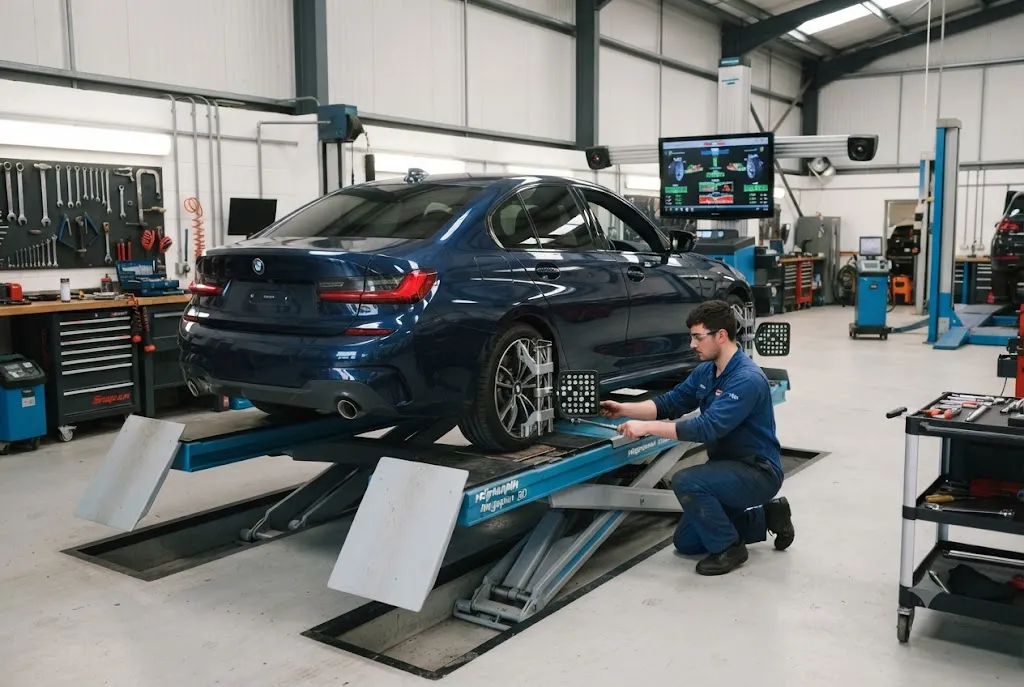
Wheel alignment is becoming a more technology-driven part of vehicle maintenance in the UK. What was once commonly described as simple tracking can now involve laser equipment, digital measurement systems, 3D imaging and increasingly sophisticated diagnostic processes. For motorists, the result can mean more accurate measurements, clearer reports and better identification of problems affecting tyres, steering and suspension.
The change matters because modern vehicles are becoming more complex. Advanced driver assistance systems, electronically controlled steering and increasingly sophisticated suspension designs can make accurate wheel geometry more important than ever. At the same time, motorists are becoming more conscious of tyre costs and want evidence that a recommended alignment service is genuinely necessary.
Why Wheel Alignment Matters
Wheel alignment refers to the positioning of a vehicle’s wheels relative to the manufacturer’s specified geometry. The key measurements include toe, camber and caster, although the exact adjustments available depend on the vehicle’s suspension design.
When wheel geometry is outside the appropriate specification, drivers may notice several symptoms. The vehicle can pull to one side, the steering wheel may sit off-centre when travelling straight, or tyres may develop uneven wear. Handling can also feel less predictable.
Correct alignment is therefore not simply about making a car feel smoother. It can help maintain predictable steering behaviour and reduce unnecessary tyre wear. Professional alignment equipment allows technicians to measure the vehicle rather than relying on visual inspection alone.
Wheel Alignment Is Moving Beyond Traditional Tracking
The word “tracking” is still widely used by motorists, but modern wheel alignment services can involve considerably more than adjusting the front toe angle.
A basic service may focus on the front axle, while a four-wheel alignment measures the geometry of both front and rear axles. Some vehicles may require a more comprehensive geometry assessment depending on their design and the symptoms being investigated.
This distinction is important because the cheapest alignment service is not automatically the correct one. A vehicle with rear-axle alignment issues, unusual tyre wear or steering problems may require more detailed measurement than a simple front tracking adjustment.
Modern workshops are increasingly able to provide before-and-after measurement reports, giving customers a clearer view of the vehicle’s condition and the changes made during the appointment.
How Digital Wheel Alignment Works
Digital wheel alignment systems use sensors, cameras or other measurement technology to establish the position and angles of the vehicle’s wheels.
Instead of relying solely on manual measurements, the equipment can compare measured values against vehicle-specific specifications. The technician can then identify which angles are outside the relevant range and determine whether adjustment is possible.
Some modern systems use 3D imaging or camera-based measurement. These systems can create a detailed representation of the vehicle’s wheel geometry and provide visual information about the measurements.
This technology can improve repeatability and make results easier to communicate. A customer does not have to simply accept that an alignment is needed; a workshop can potentially show the measured values and explain which settings require attention.
Why Alignment Technology Matters for Modern Cars
Today’s vehicles increasingly rely on electronic systems that interact with steering, suspension and vehicle positioning.
Advanced driver assistance systems can use cameras, radar and other sensors to support functions such as lane keeping, adaptive cruise control and emergency braking. These systems depend on accurate information about the vehicle’s position and surroundings.
That creates an additional reason for workshops to approach alignment carefully. Some vehicles and repair situations may require alignment checks as part of a broader calibration process.
Specialist UK alignment centres are already combining wheel alignment with ADAS-related services, reflecting the growing relationship between vehicle geometry and electronic driver assistance technology.
Does Wheel Alignment Affect ADAS?
The relationship between alignment and ADAS needs to be handled carefully because requirements vary by vehicle and repair procedure.
Wheel geometry can influence the reference position used by certain vehicle systems. If steering or suspension components have been repaired, the vehicle manufacturer may specify particular checks or calibration procedures.
This does not mean every alignment automatically requires an ADAS calibration. The correct process depends on the vehicle, the systems fitted and the work carried out.
For that reason, motorists should ask the workshop what procedure is appropriate for their specific vehicle rather than assuming that every car requires the same service.
When Should Drivers Consider Wheel Alignment?
There is no universal mileage interval that makes alignment necessary for every vehicle. Instead, motorists should pay attention to symptoms and circumstances that can affect wheel geometry.
Common reasons to have the alignment checked include:
- The vehicle pulls noticeably to the left or right.
- The steering wheel is not centred when travelling straight.
- Tyres are wearing unevenly.
- The vehicle has suffered a significant pothole impact.
- A kerb has been hit hard.
- Steering or suspension components have been replaced.
- Handling feels different from normal.
- A technician identifies a possible geometry issue during an inspection.
These symptoms do not automatically prove that alignment is the cause. Suspension wear, tyre pressure, damaged components and other problems can produce similar signs. A proper inspection is therefore preferable to assuming that alignment is required.
Wheel Balancing Is Not the Same Thing
Wheel balancing and wheel alignment are often confused because both can be performed by tyre and automotive workshops. However, they address different problems.
Wheel balancing deals primarily with the distribution of weight around a wheel and tyre assembly. An imbalance can contribute to vibration, particularly at certain speeds.
Alignment, by contrast, concerns the geometric positioning of the wheels and steering system.
A vehicle can therefore have correctly aligned wheels but still require balancing, or it can have balanced wheels while its alignment is outside specification. A technician should diagnose the actual symptom rather than treating every vibration or tyre issue as an alignment problem.
Wheel Tracking vs Four-Wheel Alignment
Front wheel tracking typically concentrates on the toe setting of the front wheels. It can be appropriate for some vehicles and situations, but it does not provide the same level of assessment as a full four-wheel alignment.
A four-wheel service measures the relevant geometry across the vehicle, including the rear axle where applicable. This can be particularly useful when handling problems or uneven tyre wear suggest that the issue may not be limited to the front wheels.
Current UK service offerings illustrate the difference. National, for example, advertises both front alignment and four-wheel digital tracking services, while Point S offers two-wheel and four-wheel laser alignment across its UK network.
How Much Does Wheel Alignment Cost?
Alignment costs vary according to the vehicle, location, type of service and amount of adjustment required.
As a current UK guide, Checkatrade reports an average figure of around £35 for front or rear alignment and around £70 for four-wheel alignment, while other UK pricing guides show broader ranges depending on whether the job involves basic tracking or a more comprehensive geometry setup.
Actual garage prices can differ considerably, so motorists should treat published figures as guides rather than fixed national rates.
The important question is not simply “How cheap is the alignment?” but “What exactly is included?” A customer comparing quotes should check whether the service involves front or four-wheel measurement, which angles can be adjusted and whether a before-and-after report is provided.
Why Cheap Alignment Is Not Always Better
Alignment is a measurement-driven service. The quality of the equipment and the technician’s ability to interpret the results both matter.
A very low-cost service may be perfectly suitable for a straightforward adjustment, but customers should understand what they are paying for. If a vehicle has unusual tyre wear, steering problems or a history of suspension repairs, a more detailed inspection may be appropriate.
Good workshops should also identify when an alignment cannot solve the underlying problem. For example, worn suspension components can prevent a vehicle from maintaining the required geometry. Adjusting alignment without addressing the underlying fault may not provide a lasting solution.
Digital Reports Can Improve Customer Confidence
One of the biggest advantages of modern alignment equipment is the ability to show measurable results.
A before-and-after report can demonstrate which settings were outside specification and how they changed after adjustment. Point S, for example, describes providing customers with before-and-after alignment information following its service.
This type of transparency can make the service easier to understand. Instead of relying entirely on a technician’s verbal explanation, customers can see the measurements and discuss the recommended work.
For garages, digital reports can also create a more professional customer experience and provide useful records for future servicing.
Wheel Alignment and Tyre Life
Incorrect alignment can contribute to uneven tyre wear. That matters because tyres are a significant running cost for motorists, particularly when a vehicle requires premium or specialist tyres.
If a tyre is wearing excessively on one edge, simply replacing it may not solve the problem. The workshop should consider whether alignment, suspension condition, tyre pressure or another factor is contributing to the wear.
This is why alignment and tyre services naturally overlap. A tyre replacement appointment can provide an opportunity to identify abnormal wear, but alignment should be recommended based on the vehicle’s condition rather than automatically added to every tyre purchase.
Electric Vehicles Add Another Consideration
Electric vehicles have brought additional attention to tyre and alignment maintenance. Their weight distribution, torque characteristics and tyre specifications can differ from those of conventional vehicles.
EV owners should therefore pay attention to tyre condition and unusual wear just as they would with a petrol or diesel vehicle.
Wheel alignment can also form part of the broader maintenance picture for EVs, alongside battery diagnostics, braking systems and suspension checks. As discussed in the wider EV servicing cluster, modern workshops increasingly need to combine mechanical expertise with advanced diagnostic capability.
What Makes a Good Alignment Centre?
Drivers do not necessarily need the largest national workshop network to receive a good alignment service. A specialist independent centre can have excellent equipment and experienced technicians, while a national chain can provide convenience and consistent processes.
Customers can look for several practical indicators:
- Modern alignment equipment appropriate for the vehicle.
- Technicians who can explain the measurements clearly.
- Vehicle-specific manufacturer specifications.
- Before-and-after measurement reports.
- A willingness to inspect related steering and suspension components.
- Clear pricing before work begins.
- Appropriate procedures for vehicles with ADAS.
The strongest workshops do not simply sell alignment. They diagnose the reason it may be required and explain what the measurements mean.
Could Alignment Technology Become Even Smarter?
The direction of the market suggests that alignment equipment will continue becoming more connected, visual and data-driven.
Digital systems already make it easier to capture vehicle measurements, compare them with specifications and produce customer reports. Future workshop technology is likely to build on this foundation through greater integration with diagnostic systems and vehicle data.
As vehicles use more sensors and driver-assistance technology, the relationship between mechanical geometry and electronic systems could become increasingly important.
This does not mean that technicians will become unnecessary. In fact, their judgement may become more valuable. Equipment can measure the vehicle, but an experienced technician still needs to understand why a measurement is outside specification and whether the correct solution is adjustment, component replacement or further diagnosis.
What Motorists Should Ask Before Booking
A few simple questions can help customers choose the right service:
- Is this a two-wheel or four-wheel alignment?
- Which alignment angles will be measured?
- Will the vehicle be checked against manufacturer specifications?
- Will I receive a before-and-after report?
- Does my vehicle have any specific ADAS requirements?
- Will you check for worn steering or suspension components?
- What is included in the quoted price?
These questions can make it easier to compare workshops based on service quality rather than headline price alone.
Final Thoughts
Wheel alignment is becoming smarter because the vehicles receiving the service are becoming smarter. Digital measurement, laser systems and 3D technology can give workshops greater precision while making results easier for motorists to understand.
However, technology should support good diagnosis rather than replace it. The best alignment service combines accurate equipment, vehicle-specific specifications and experienced technicians who can identify the real cause of a handling or tyre-wear problem.
For UK motorists, that means looking beyond the cheapest tracking price. A transparent workshop that measures correctly, explains the results and provides appropriate adjustments can offer much greater value over the life of the vehicle.
As electric vehicles, ADAS and connected vehicle systems become more common, wheel alignment is likely to become an increasingly integrated part of modern automotive maintenance rather than a simple tyre-shop adjustment.
