

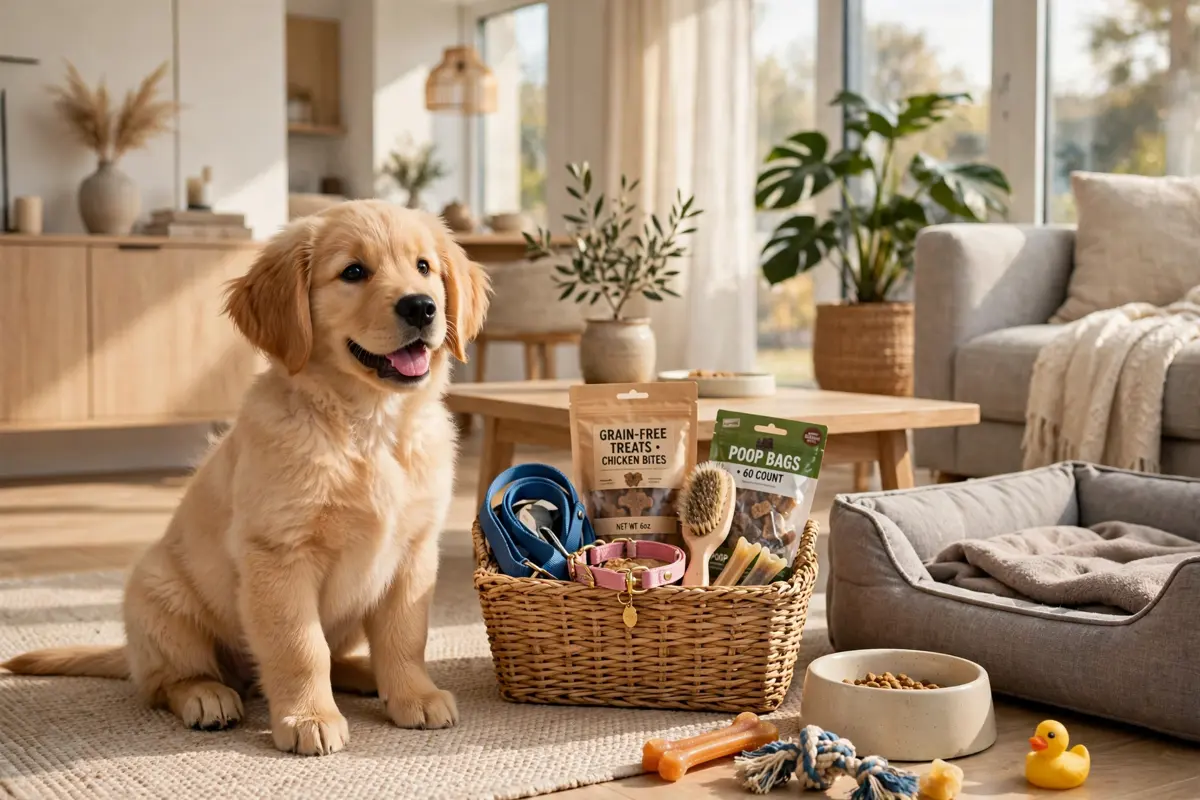
Bringing a dog home for the first time is exciting, and a little overwhelming. There is a lot to buy, a lot to learn, and a puppy that needs you from the first hour. A simple first time dog owner checklist takes the guesswork out of it, so you can enjoy the first week instead of rushing to the shops every day.
This guide covers the 12 essentials to buy before your puppy comes home, plus the first-week jobs that make settling in easier. It is written for first-time owners in the UK who want practical advice, not a shopping list that costs a fortune.
Before Your Puppy Arrives: The 12 Essentials
Start with the basics your puppy needs on day one. A comfortable bed gives your puppy a safe place to sleep, and a crate gives them a den of their own. Many owners find a crate helps with toilet training, because puppies rarely soil their sleeping area. Put the crate somewhere quiet, with a blanket that smells of you.
Food and water bowls should be sturdy and hard to tip over. Stainless steel bowls are easy to clean and last for years. Buy the same food your puppy has been eating with the breeder or rescue centre, and change it gradually over a week if you want to switch brands. A sudden change in food often means an upset stomach.
You will also need a collar with an ID tag, a lead, and a harness if your puppy pulls. By law in the UK, your dog must wear a collar with your name and address on a tag when in a public place. A harness spreads pressure across the chest and is kinder on a young puppy’s neck than a collar alone.
The rest of the essentials are a brush suited to your dog’s coat, puppy shampoo, poo bags, a few chew toys, training treats, and an enzyme cleaner for accidents. Buy small quantities first. Your puppy will tell you quickly which toys they love and which treats motivate them, and you can stock up on the winners.
Choosing the Right Food
Good food is the single most important purchase you will make. Look for a complete puppy food that suits your dog’s expected adult size, since large breeds grow at a different rate from small ones. The label should list a named meat, such as chicken or lamb, as the first ingredient.
Feed three or four small meals a day for the first six months, then move to two meals a day. Puppies burn energy fast, and small frequent meals suit their stomachs better than one big bowl. Keep fresh water available at all times, and wash the bowls daily.
Avoid giving your puppy chocolate, grapes, onions, cooked bones or xylitol, which is found in some sugar-free products. All of these can make a dog seriously ill. If your puppy eats something worrying, call your vet straight away rather than waiting to see what happens. For trusted guidance on settling a puppy in, Dogs Trust publishes clear, free advice for new owners.
Setting Up a Safe Space at Home
Your puppy will explore everything with their mouth, so puppy-proof the house before they arrive. Move cables out of reach, put cleaning products in high cupboards, and check the garden fence for gaps. A puppy can squeeze through a surprisingly small hole.
Choose one room as your puppy’s base, with their bed, water bowl and a few toys. Baby gates are useful here, because they let your puppy see the family while keeping them safe. Keep the room calm in the first days, and let your puppy come to you rather than crowding them.
Pick a toilet spot in the garden and take your puppy there after every meal, after every sleep, and after every play session. Praise them the moment they go, with a treat and a happy voice. Most puppies learn the routine within a few weeks if everyone in the house is consistent. If you are still deciding which breed suits your home, read our guide to how to choose a dog breed that fits your lifestyle before you commit.
Vet Care, Vaccinations and Insurance
Book a vet appointment for the first week, even if your puppy seems healthy. The vet will check your puppy over, confirm the vaccination schedule, and talk about flea and worm treatment. Most puppies need two rounds of vaccinations before they can go for walks in public places.
Microchipping is a legal requirement in the UK, and your puppy should already be chipped before you collect them. Check the chip is registered to you, not the breeder, and keep the details up to date if you move house. A chip that points to an old address is no help if your dog goes missing.
Pet insurance is worth sorting out early, because many policies exclude conditions that appear before cover starts. Compare accident-only cover with lifetime cover, and read the small print on dental treatment and hereditary conditions. Our guide to travel insurance explained covers a different kind of cover, but the same rule applies, read the exclusions before you buy.
Training Starts on Day One
Training a puppy is mostly about patience and routine. Teach their name first, then the basics, sit, come and leave it. Keep sessions to five minutes, several times a day, and always end with a success. A puppy that is tired or frustrated learns nothing.
Reward the behaviour you want, and ignore the behaviour you do not. If your puppy jumps up, turn away calmly and reward them when all four paws are on the floor. Shouting rarely helps, and it can make a nervous puppy worse. Short, happy training sessions build a dog that wants to listen.
Socialisation matters as much as training. In the first few months, let your puppy meet different people, hear traffic and household noises, and see other friendly dogs. A puppy that meets the world early grows into a confident adult. Puppy classes are a good way to do this, and they give you a trainer to ask when things go wrong.
A Real First Week: What It Looks Like
Emma brought home an eight-week-old cocker spaniel on a Saturday. She had the bed, crate, food, bowls, collar, lead and toys ready, and she had booked the vet for Tuesday. The first night, the puppy cried for an hour, then settled with a ticking clock wrapped in a blanket beside the crate.
By Wednesday the puppy knew the garden toilet spot, and by Friday it slept through the night. The hardest part was not the puppy, it was the family forgetting the rules. One person sneaked the puppy a treat from the table, and another let it sleep on the sofa, which undid two days of crate training. Once everyone agreed on the same rules, the puppy settled fast.
Emma’s lesson was simple. Buy the essentials before the puppy arrives, agree the house rules before the puppy arrives, and accept that the first week is tiring. It gets easier every day, and by the end of the first month most owners wonder how they ever lived without a dog.
Taking Your Dog Out and About
Once vaccinations are complete, short walks build fitness and confidence. Five minutes of walking per month of age, twice a day, is a good rule for puppies, so a three-month-old puppy gets about 15 minutes at a time. Too much exercise can damage growing joints, so resist the urge to take a young puppy on long hikes.
When you travel with your dog, plan ahead. Many UK hotels now welcome dogs, and checking the pet policy before you book saves an awkward arrival. Our guide to cheap hotel deals in the UK includes tips on finding stays that suit the whole family, dogs included. For trips abroad, our guide to finding a good restaurant abroad is handy, and many European restaurants welcome well-behaved dogs on their terraces.
Quiet evenings at home matter too. A tired puppy is a happy puppy, and a calm evening routine helps them settle. Our guide to planning a home movie night on a budget is a good way to spend a Friday night in with your new best friend curled up beside you.
Your First Week Checklist
Tick these off in the first seven days. Vet appointment booked and attended, microchip details checked, food and water routine settled, toilet spot established, crate and bed in use, first training sessions done, insurance in place, and house rules agreed with everyone in the home.
If something goes wrong, do not panic. Puppies chew shoes, have accidents and wake you at night. Every owner goes through it, and it passes. Ask your vet, your breeder, or a local trainer for help early, rather than letting a small problem grow into a habit.
A dog is a 10 to 15 year commitment, and the first week sets the tone for all of it. Buy the essentials, keep the routine simple, and be patient with your puppy and with yourself. The reward is a loyal companion who will be beside you for years.
