

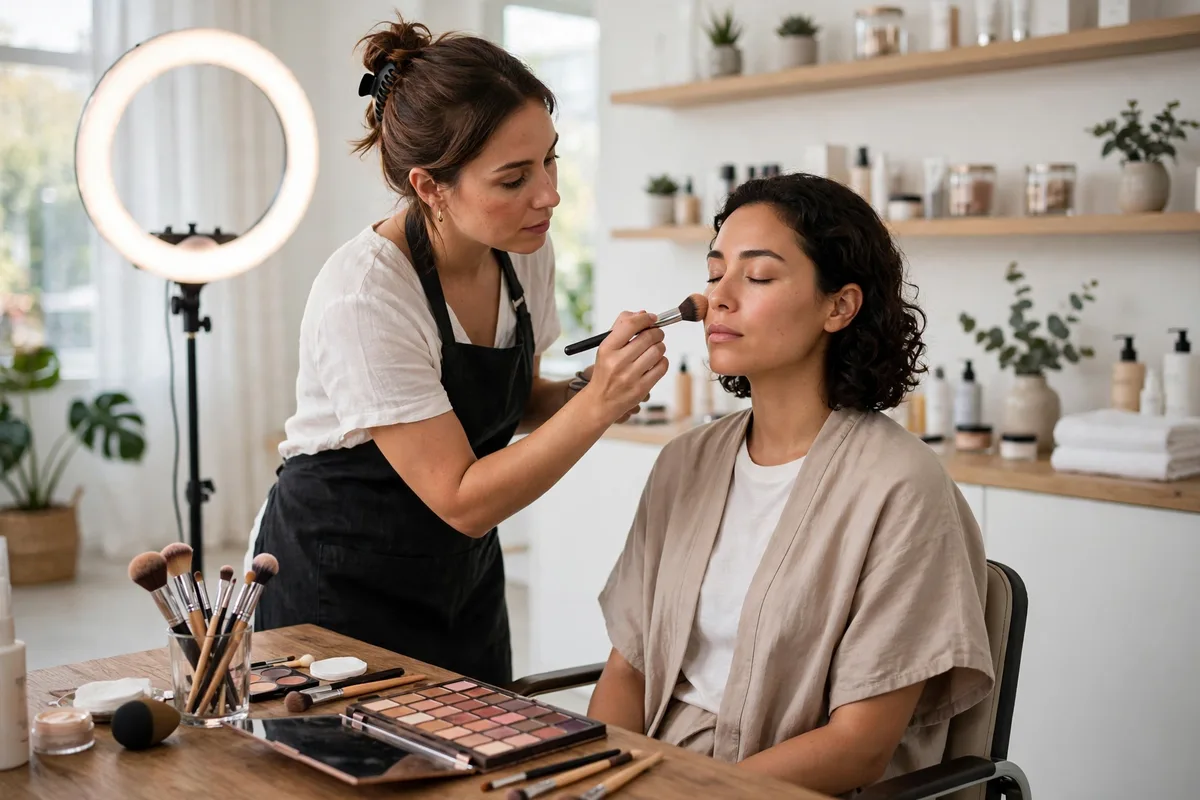
If you love experimenting with makeup and helping other people feel confident, you have probably wondered how to become a makeup artist in the UK. It is a career that blends creativity with people skills, and it can lead in many directions: bridal work, salons, retail counters, fashion shoots, theatre, film and television. There is no single set route in, which is good news — you can start from almost any position. This guide explains the training options, the skills that matter most, how to build your kit and portfolio, and the practical steps to your first paying clients.
What Does a Makeup Artist Actually Do?
Day to day, a makeup artist consults with clients, designs looks suited to their features and the occasion, and applies products skilfully and hygienically. Bridal artists manage early starts and emotional mornings; media artists work to briefs and tight schedules on set. All of them need an eye for colour and skin tone — the kind of judgement behind choosing the right nude gloss shade for a client rather than simply following a trend. Understanding how products behave matters just as much: knowing why a corrector works, as explored in our Benefit Big Beautiful Eyes review, is the sort of product knowledge clients are really paying for.
Training Routes: Qualifications and Courses
Formal qualifications are not legally required to work as a makeup artist in the UK, but structured training dramatically shortens the learning curve. Colleges offer Level 2 and Level 3 diplomas in makeup artistry and theatrical, special effects and media makeup, while private academies in London and other major cities run intensive courses lasting from a few days to several months. Short courses suit people targeting bridal and occasion work; longer programmes are better preparation for film and fashion. Whichever route you choose, prioritise courses with genuine practical hours on real faces — watching tutorials builds familiarity, but supervised practice builds skill. Many working artists also add short specialist courses later, such as airbrushing, hairstyling or special effects, to widen the work they can accept.
The Skills That Separate Professionals from Hobbyists
Technique is only part of the job. Professionals are punctual, calm under pressure and obsessive about hygiene: brushes cleaned between clients, products decanted rather than double-dipped, and out-of-date cosmetics discarded. Product literacy is essential — you should be able to explain what everyday products do and who they suit, in the way our round-up of the best health and beauty products for everyday use breaks down their benefits. Client skills matter equally: listening carefully, managing expectations kindly, and making someone feel at ease in your chair will earn you more repeat bookings than any single technique.
Building Your Kit Without Wasting Money
A professional kit is an investment, so build it in stages. Start with a versatile foundation range covering light to deep skin tones, reliable concealers and correctors, neutral eyeshadow palettes, and quality brushes. Themed collections can be useful inspiration for colour stories — the REM Beauty Wicked collection shows how a coordinated palette is put together — but buy individual products you will use weekly rather than novelty sets. Subscription services can be a cost-effective way to test new products before committing to full sizes; our guide to the best beauty subscription boxes explains what is worth trying. Keep a simple inventory, note expiry dates, and replace staples before they run out mid-booking.
Creating a Portfolio and Finding First Clients
Your portfolio is your shop window. Begin by practising on friends and family, photographing every look in good natural light, and collaborating with local photographers and models on test shoots where everyone works for images. Post consistently on social media, showing close-ups, before-and-after shots (with permission) and a variety of skin tones and ages. A compact travel kit helps for location work — the sets covered in our guide to beauty kits and travel sets are a good starting point for working on the move. Offer introductory rates for your first weddings or proms, ask every happy client for a review, and your portfolio will quickly turn into paid bookings.
Freelance, Employed or Counter Work?
Most makeup artists are self-employed, which means registering with HMRC, keeping simple accounts, arranging insurance, and marketing yourself continuously. Employed routes exist too: beauty counters, salons and spas offer stability and training, and are an excellent way to build speed and product knowledge before going freelance. Film and television work often comes through agencies and trainee schemes, where reliability and discretion matter as much as artistry. Many professionals blend several income streams — bridal work at weekends, counter shifts midweek, occasional shoots — which smooths out the seasonal gaps.
What Can You Earn, and How Does the Career Grow?
Income varies widely and honestly. New freelance artists often charge modest rates for occasion makeup while they build a reputation, while experienced bridal specialists in busy areas can command premium fees, especially for peak-season Saturdays booked months ahead. Counter and salon roles offer steadier pay with less flexibility; film and television day rates are attractive but the work is project-based and competitive to enter. What grows earnings most reliably is a niche plus a reputation: artists known for natural bridal makeup, mature skin, or a particular cultural style get recommended repeatedly. Keep raising your skills, review your prices every year, and treat your reviews and portfolio as business assets, because in this industry your next booking almost always comes from your last one.
One final habit worth building from the start is continuous learning. Follow working artists whose style you admire, study the looks in current campaigns and editorials, and practise one new technique every week, even if it never leaves your own face. Beauty changes quickly — products, finishes and client expectations move on every season — and the artists who keep experimenting are the ones whose work always looks current. Keep a simple notebook of what worked, what failed and what you would change; over a year it becomes your own personal training manual.
Final Thoughts
Becoming a makeup artist in the UK is less about one perfect course and more about steady, deliberate practice: train properly, learn your products, build a kit that earns its keep, and treat every client like a future recommendation. Start where you are, photograph everything, and keep refining your eye. The artists who build lasting careers are rarely the most naturally talented — they are the most consistent, professional and curious.
