

What is an Intrapreneur?
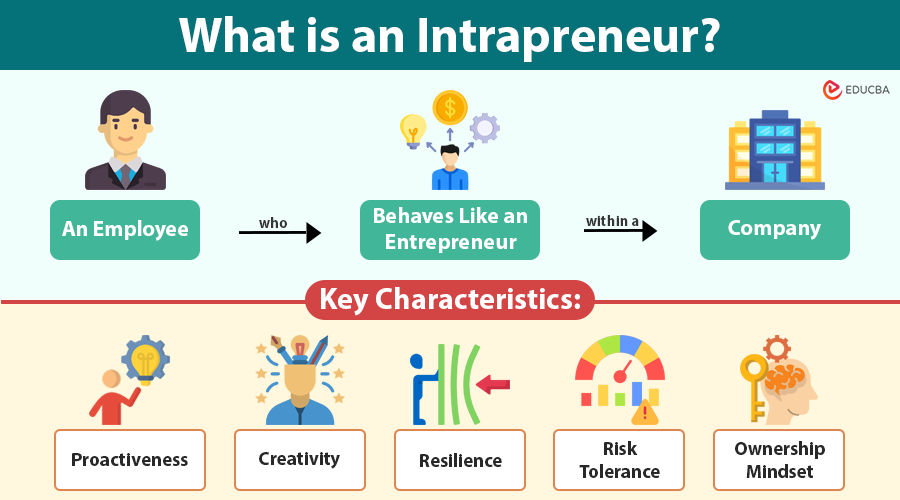
An intrapreneur is an employee who behaves like an entrepreneur within a company. Intrapreneurs use the company’s resources to create new ideas, products, or processes. They take initiative, challenge the conventional way of doing things, and take calculated risks to drive innovation — all while working within the organization.
For example, Sheryl Sandberg at Facebook built the company’s entire advertising business from scratch, applying entrepreneurial thinking within the organization and transforming it into a revenue powerhouse.
Table of Contents
Key Takeaways
- Intrapreneurs drive innovation by applying entrepreneurial skills within their organization.
- They identify opportunities, challenge norms, and take calculated risks to create value.
- Intrapreneurship boosts employee engagement, accelerates problem-solving, and strengthens competitiveness.
- Leadership support, empowerment, and a culture that tolerates intelligent risk-taking are essential for intrapreneurship to thrive.
- Unlike entrepreneurs, intrapreneurs use company resources and operate within an established business structure.
- Organizations that nurture intrapreneurs position themselves to adapt and grow in a rapidly changing market.
Key Characteristics of Intrapreneurs
Intrapreneurs often share common traits, including:
- Proactiveness: They identify opportunities for improvement or new markets before being told to do so.
- Creativity: They think outside the box and generate original ideas.
- Resilience: They persist in the face of challenges or failures.
- Risk tolerance: They are willing to experiment and accept a degree of uncertainty.
- Ownership mindset: They behave as if they own the business unit or project they are working on.
Role of an Intrapreneur
An intrapreneur plays a key role in driving innovation and growth within a company. Their main contributions include:
- Identifying new opportunities for products, services, or processes.
- Developing creative solutions to existing problems.
- Leading projects that introduce change and improvement.
- Challenging outdated practices and promoting a culture of innovation.
- Working with different teams to turn ideas into reality using company resources.
Why Intrapreneurship Matters?
Organizations that encourage intrapreneurship can unlock significant benefits:
- Increased innovation: It help companies stay ahead by developing breakthrough products and services.
- Employee engagement: Providing employees with the opportunity to innovate boosts morale and reduces turnover.
- Faster problem-solving: It often cut through bureaucracy to address customer needs directly.
- Competitive advantage: New ideas developed internally can strengthen the company’s market position.
How to Foster Intrapreneurship?
Building a culture that supports intrapreneurship requires more than a slogan — it demands commitment from leadership and a supportive environment. Here are some ways organizations can encourage intrapreneurial behavior:
- Empower employees: Allow them to own projects and make decisions.
- Tolerate failure: Encourage intelligent risks and view failure as a learning opportunity.
- Provide resources: Fund promising ideas with time, money, and mentorship.
- Break down silos: Encourage cross-functional collaboration and open communication.
- Recognize and reward: Celebrate successful intrapreneurial initiatives to motivate others.
Challenges of Intrapreneurship
While intrapreneurship has great potential, it also faces obstacles:
- Bureaucracy: Rigid processes and hierarchy can stifle innovative thinking.
- Fear of failure: Employees might avoid trying new things if they are afraid of the consequences.
- Lack of support: Without strong buy-in from leadership, intrapreneurs can become frustrated and leave.
Organizations must consciously address these barriers to fully reap the benefits of intrapreneurship.
The Role of Leadership in Intrapreneurship
Leaders play a crucial role in cultivating intrapreneurship. They must:
- Provide psychological safety so employees feel confident sharing bold ideas.
- Champion and sponsor promising intrapreneurial initiatives.
- Model the behavior they expect by showing openness to change and experimentation.
- Allocate time for employees to work on innovative side projects — like Google’s famous “20% time.”
Without visible leadership support, even the most talented intrapreneurs will struggle to thrive.
Intrapreneurship vs. Entrepreneurship
While both intrapreneurs and entrepreneurs innovate and take risks, there are key differences:
| Aspect | Entrepreneur | Intrapreneur |
| Resources | Builds resources independently | Uses company resources |
| Risk | Personal financial risk | Organizational risk |
| Environment | External / creates own venture | Internal / within existing company |
| Freedom | Absolute autonomy | Relative autonomy within corporate boundaries |
| Reward | Direct profits and ownership | Often recognition, promotions, or bonuses |
Understanding these distinctions helps organizations better support intrapreneurs while respecting their unique context.
Case Studies of Successful Intrapreneurs
- Art Fry at 3M: Developed the Post-it Note while trying to solve the problem of a bookmark that would not fall out of his hymn book.
- Paul Buchheit at Google: Created Gmail as a side project that revolutionized email.
- Ken Kutaragi at Sony: Pioneered the PlayStation by challenging internal resistance and eventually creating an entirely new product line.
These success stories show how intrapreneurs can transform a business if they are supported.
Future of Intrapreneurship
As companies adapt to faster technological change and rising competition, intrapreneurship will only become more critical. The future will likely see:
- More dedicated intrapreneur labs or innovation hubs within companies.
- Partnerships between intrapreneurs and external startups.
- Gamified challenges and hackathons to crowdsource employee ideas.
- A stronger focus on upskilling employees to foster an intrapreneurial mindset.
Forward-thinking organizations will actively invest in intrapreneurship to maintain their innovative edge.
Final Thoughts
Intrapreneurs combine the best of both worlds: the passion and initiative of entrepreneurs with the resources and scale of established organizations. As the pace of change accelerates across industries, empowering intrapreneurs may be one of the most strategic moves a company can make to thrive in the future.
Frequently Asked Questions (FAQs)
Q1. Do intrapreneurs need special training or education?
No formal degree is required to become an intrapreneur; however, skills such as creative thinking, problem-solving, project management, and leadership can be beneficial. Many organizations also offer internal innovation or leadership programs to build these skills.
Q2. How do intrapreneurs differ from high-performing employees?
While high-performing employees may excel in their assigned tasks, intrapreneurs take it a step further by proactively creating and leading new initiatives, often outside their standard role.
Q3. What happens if an intrapreneur’s idea fails?
Ideally, the organization should treat this as a learning opportunity. Lessons from failed ideas can improve future projects and contribute to a stronger innovation culture.
Q4. Can an intrapreneur become an entrepreneur later?
Absolutely. Many successful entrepreneurs began their careers as intrapreneurs, gaining valuable experience and confidence before launching their ventures.
Recommended Articles
We hope this guide on intrapreneurs has been clear and informative. For more expert-backed insights on innovation, leadership, and driving change within organizations, explore these related articles:
- Price Leadership
- Finance Assignment Help
- Finance Skills for International Students
- Restaurant Finance Management
