

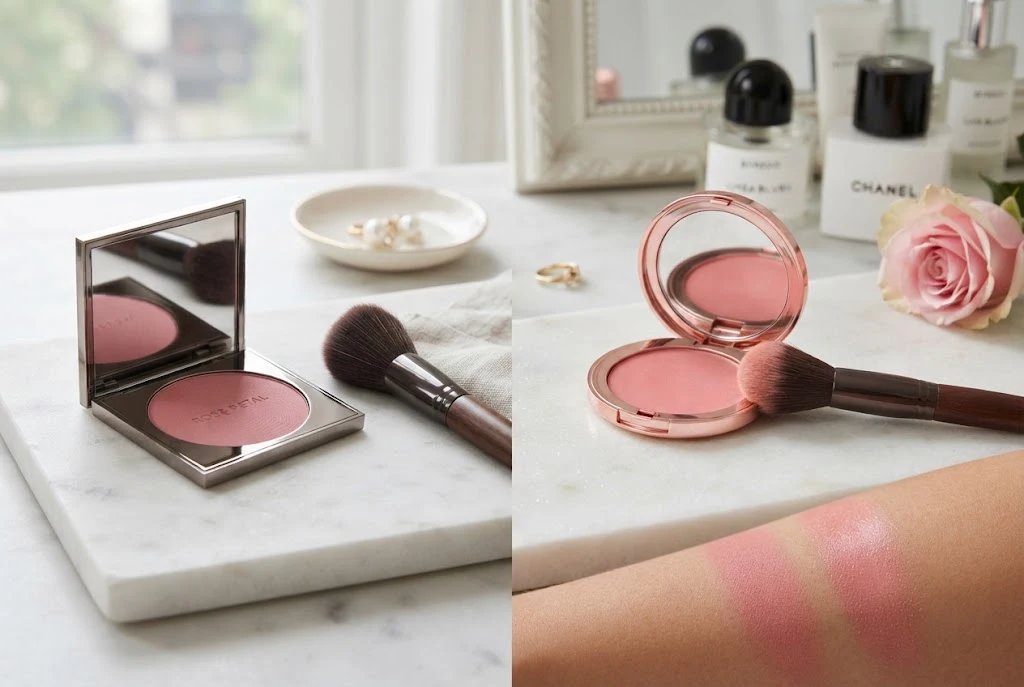
Choosing between powder blush and cream blush can make a surprising difference to the way your makeup looks and wears throughout the day. Both formulas can add colour and definition to the cheeks, but they behave differently on the skin. Powder blush tends to offer a more traditional, buildable finish, while cream blush is often chosen for a softer, more skin-like appearance.
The right option depends on your complexion, foundation, preferred finish, application habits and the type of makeup look you want to create. Rather than treating one formula as universally better, it makes more sense to understand how each one works and when you may prefer it.
What Is Powder Blush?
Powder blush is a pressed or loose cosmetic formula designed to add colour to the cheeks. It is typically applied with a makeup brush and can range from sheer and subtle to highly pigmented.
Modern powder blushes are available in matte, satin, luminous and shimmery finishes. Some are designed to create a natural-looking flush, while others provide stronger colour or additional definition.
For example, Clinique’s Blushing Blush Powder Blush uses a silky powder formula that can be built to the desired intensity, while MAC Powder Blush is offered in multiple natural-looking finishes and is designed to blend evenly onto the skin.
What Is Cream Blush?
Cream blush has a creamy or emollient texture and is generally designed to blend directly into the complexion. Depending on the product, it may come in a compact, stick, tube or other format.
Cream formulas are often associated with sheer, buildable and natural-looking finishes. Boots describes cream blushers as generally more sheer and natural-looking than powder formulas, while also highlighting their blendability and buildable colour.
Some cream blushes remain dewy, while others dry down to a satin or more controlled finish. Therefore, the word “cream” alone does not tell you exactly how the product will look once applied.
Powder Blush vs Cream Blush: The Main Difference
The biggest difference is texture. Powder blush is dry and usually sits over the complexion, whereas cream blush has a more flexible texture that can blend into the base underneath.
This difference affects application, finish and compatibility with other makeup. Powder can be particularly straightforward when your base has already been set, while cream can be useful when you want to preserve a fresh or dewy complexion.
Your personal preference matters too. Some people prefer the precision of a brush and the familiar feel of powder. Others like applying cream blush with their fingers for a quick, minimal-makeup routine.
Powder Blush for Different Makeup Finishes
One advantage of powder blush is the variety of finishes available. You can choose a matte formula for a restrained appearance, a satin texture for subtle dimension or a shimmery formula when you want more visible radiance.
Matte Powder Blush
Matte powder blush does not have obvious reflective particles, making it useful when you want the cheeks to look defined without additional shine.
It can also work well when the rest of your makeup already contains luminous products and you want to maintain some balance.
Satin Powder Blush
Satin finishes sit between matte and luminous. They can add colour and dimension without producing an intensely reflective effect.
This type of finish can be versatile for everyday makeup because it gives the cheeks some life while remaining relatively understated.
Shimmery Powder Blush
Shimmery blush contains reflective particles that catch the light. It can be useful for evening makeup or when you want the cheek colour to contribute to an overall glowing look.
However, if your priority is an extremely natural-looking finish, a matte or satin powder may be easier to control.
When Powder Blush May Be Useful
Powder blush can be particularly convenient if you prefer a defined and easily adjustable cheek colour. It is simple to pick up with a brush, tap off excess and gradually build intensity.
It can also be useful if you already use setting powder or prefer a less dewy complexion. Because the product is dry, it can fit naturally into a powdered makeup routine.
Revlon, for example, describes its Powder Blush as a buildable formula and recommends sweeping it across the apples of the cheeks before blending towards the temples.
When Cream Blush May Be Useful
Cream blush can be appealing if you prefer a fresh, luminous or skin-like makeup finish. Its texture can make it particularly easy to blend with fingers, although brushes and sponges can also be used.
It can also suit quick makeup routines. Boots notes that cream blush can be applied with fingertips and gently tapped into the skin, making it convenient for minimal makeup days.
If your main goal is a dewy complexion, our dedicated guide to cream blush explores shades, formulas and application techniques in greater detail.
Which Formula Is Better for Dry-Looking Skin?
There is no universal answer because products within each category behave differently. However, cream blush is often considered when you want to maintain a more luminous, moisturised-looking complexion.
Some powder formulas can emphasise visible dryness if applied heavily or layered over a very dry base. That does not mean powder blush cannot work with dry skin. A finely milled, satin or luminous formula applied lightly can still create an attractive finish.
Good skin preparation is important whichever formula you choose. Applying makeup over comfortable, moisturised skin can help create a smoother overall appearance.
Which Formula Is Better for Oily Skin?
Again, the answer depends on the individual product and your base makeup. Powder blush may appeal to people who prefer a more controlled, less dewy finish, while some cream formulas are designed to set after application.
If you have an oilier complexion, consider how the blush interacts with your foundation and setting products rather than judging the formula category alone.
A lightweight cream blush that sets can behave very differently from a glossy balm, just as a finely milled matte powder can behave differently from a highly luminous powder.
Powder Blush vs Cream Blush for Beginners
For beginners, both formulas can work. The easiest option is usually the one that gives you enough control to build colour gradually.
Powder blush can be beginner-friendly because you can pick up a small amount with a brush and remove excess before applying it. This makes it relatively easy to increase the intensity slowly.
Cream blush can also be forgiving when the formula is sheer or buildable. You can place a small amount on the cheeks and tap it into the skin before deciding whether more colour is needed.
If you are new to cheek products, avoid starting with an extremely pigmented formula regardless of whether it is powder or cream.
How to Apply Powder Blush
Applying powder blush successfully is mainly about controlling the amount of product and blending the edges.
- Complete your base makeup and set areas that need powder.
- Pick up a small amount of powder blush with a suitable brush.
- Tap off excess product before touching the face.
- Apply the colour gradually to the cheeks.
- Blend the edges so there are no obvious lines.
- Add another light layer if more intensity is required.
MAC recommends sweeping a brush over the powder, tapping off excess and applying it with controlled strokes before blending.
How to Apply Cream Blush
Cream blush generally works best when applied in small amounts. You can use your fingertips, a makeup brush or a sponge depending on the formula.
- Prepare your complexion and allow skincare or base products to settle.
- Apply a small amount of cream blush to the cheek area.
- Tap or gently blend the product into the skin.
- Soften the outer edges.
- Build another thin layer if you want stronger colour.
Avoid rubbing aggressively, particularly when you have foundation underneath. Tapping can help distribute the colour while reducing the chance of disturbing your base.
Can You Use Powder and Cream Blush Together?
Yes. Layering the two formulas can give you more flexibility and can also help create a customised finish.
One approach is to apply cream blush first and then lightly layer powder blush over it. This can increase colour intensity while adding some structure to the finish.
UK products are also available specifically as cream-and-powder combinations. For example, No7’s Pro Artist Blush Duet pairs a powder texture with a dewy cream texture and allows the two formulas to be worn separately or layered.
Collection also sells a cream-and-powder blush duo that allows the cream to be applied first and powder layered over it.
Powder Blush and Cream Blush for Long-Lasting Makeup
Longevity depends on far more than formula type. Your skin, foundation, application technique, weather and how often you touch your face can all influence how long blush remains visible.
Powder blush can work well within a set makeup routine, particularly when applied over a suitable base. Cream blush can also last well when the formula is designed to set, and layering a small amount of powder over cream can provide additional structure.
Rather than applying a large amount at the beginning, build the colour gradually. This usually produces a cleaner finish and gives you more control throughout the day.
Powder Blush Colours to Consider
Powder blush is available in almost every colour family, so your choice does not have to stop at traditional pink.
Pink and Rosy Shades
Pink and rosy shades can create a fresh-looking flush. Softer pinks may suit understated daytime makeup, while deeper rose colours can provide more visible definition.
Peach and Coral Shades
Peach and coral can introduce warmth to the complexion and work well alongside warm-toned eye makeup or bronzer.
Brown and Deeper Blush Shades
Brown-toned blush can be useful when you want a more muted or sculpted appearance. Deeper shades should generally be applied gradually because pigmentation can become more pronounced after blending.
Very dark or unusual colours can be used creatively, but they require more careful placement and blending than traditional blush shades.
What About Black Blush?
Black blush is a niche makeup concept rather than a conventional everyday blush category. Products marketed this way may use colour-adapting or sheer formulas rather than behaving like a straightforward black pigment.
If you come across a very unusual blush colour, check how the manufacturer describes the formula and finish before assuming the colour will appear exactly as it looks in the pan or packaging.
Powder Blush vs Cream Blush With Foundation
Your foundation can help determine which blush formula feels easiest to use.
If you wear a powder foundation or heavily set liquid foundation, powder blush may integrate more naturally with the surface. If you prefer a lightweight liquid foundation with a dewy finish, cream blush can preserve that softer appearance.
However, makeup does not need to follow strict rules. You can successfully combine different textures if you apply them carefully and allow each layer to settle.
How to Choose Between Powder and Cream Blush
Consider the following questions before buying:
- Do you prefer a matte, satin or luminous finish?
- Do you normally wear a powdered or dewy base?
- Do you prefer using a brush or your fingertips?
- Do you want a subtle wash of colour or stronger pigmentation?
- Does your makeup need to remain controlled in appearance throughout the day?
- Are you looking for a quick minimal-makeup routine?
- Do you want to layer products to customise the finish?
Your answers can point you towards a formula without needing to follow a rigid skin-type rule.
Powder Blush or Cream Blush: Can You Keep Both?
There is no reason your makeup collection has to contain only one blush formula. Keeping both can be useful if your makeup style changes depending on the occasion.
You might use cream blush when you want a fresh, dewy complexion and reach for powder blush when you want more definition or a softer matte finish. Having both can also make it easier to adapt your makeup during different seasons.
For a broader overview of cheek products, start with our guide to blush makeup. If you specifically want a luminous finish, our guide to cream blush covers dewy formulas and shade selection in more detail.
Final Thoughts
The choice between powder blush and cream blush ultimately comes down to the finish, texture and application experience you prefer. Powder blush offers a familiar format with a wide range of finishes and buildable colour, while cream blush can provide a softer, more skin-like appearance and a convenient application method.
Neither formula needs to be treated as a permanent choice. Your foundation, skin preparation, desired look and occasion can all change which product feels most suitable.
If you are building a versatile makeup routine, understanding both formulas gives you more flexibility. Start with a shade you genuinely like, apply it gradually and focus on blending. The goal is not simply to add colour, but to make the blush look naturally connected to the rest of your complexion.
Once you have decided which cheek formula suits your routine, you can explore other parts of your beauty collection, including Benefit blush and our upcoming guide to lip gloss.
